
Centauri Dreams‘ hunch about extraterrestrial life is that it’s ubiquitous. The guess is that we’ll eventually find off-Earth biospheres right here in the Solar System, probably on Mars, perhaps on one or more of the Jovian moons, possibly in the atmospheres of one or more of the gas giants (and the Venusian atmosphere is now drawing serious interest). We’re likely to find simple life around extrasolar stars in equal profusion.
This is a heartening thought, but the key word is ‘simple.’ For the other half of the Centauri Dreams hunch is that extraterrestrial intelligence is rare. At one point, Carl Sagan was estimating there might be one million civilizations existing at any given time in our galaxy. The betting here is that the number is between 1 and 10, with the likelihood being 1. See Ward, Peter and Donald Brownlee, Rare Earth: Why Complex Life is Uncommon in the Universe (New York: Copernicus Books, 2000) for the background to this argument.
 But we needn’t be troubled if we find no other civilizations, a point Martin Rees makes in Our Cosmic Self-Esteem, the third part of a three-part interview with Astrobiology Magazine. Rees is Britain’s Royal Astronomer, a professor of cosmology and astrophysics and Director of the Institute of Astronomy at Cambridge. His contributions range from the origins of the cosmological background radiation to the black holes that apparently reside at the heart of quasars. As always, Rees is worth quoting at length:
I think another perspective astronomy brings to bear on these issues is that astronomers are aware of the tremendous time span lying ahead of us. Most educated people are aware that we are the outcome of nearly four billion years of Darwinian selection, and I think many tend to think humans are the culmination of all that. But astronomers know that our sun is less than halfway through its life span. Our sun will flare up and die six billion years from now, a period of time longer than the sun’s history so far. Some people imagine that there will be humans watching the sun’s demise six billion years from now, but any creatures that exist then will be as different from us now as we are from bacteria or amoebae.
We should think of ourselves as still in the early stage of the emergence of complexity and intelligence. It’s hard to conceive what forms that might take on Earth or far beyond Earth. But I think we should see ourselves as nowhere near the culmination of evolution.
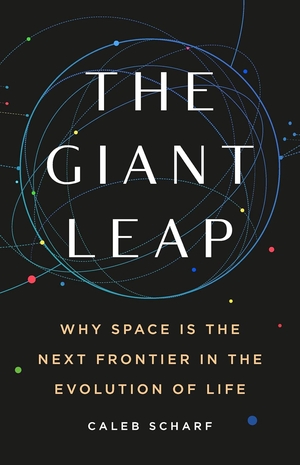
Even if life is now very rare in the galaxy or unique to Earth, that doesn’t mean life is forever going to be a trivial afterthought in the cosmos. In the time lying ahead, life from Earth could spread all through the galaxy. The Earth could be cosmically important as the seed from which life spreads more widely.
You can read the rest of the Rees interview here. And don’t miss Rees’ own take on long-term thinking, spurred by the fact that his new book The Final Century was published in America as The Final Hour. Seeing this as another example of our need for instant gratification, the bane of measured thought, Rees says “I was really annoyed about that.” Amen.
0 Comments