
Is this not a beautiful sight? Europa Clipper sits atop a Falcon Heavy awaiting liftoff at launch complex 39A at Kennedy Space Center. Launch is set for 1206 EDT (1606 UTC) October 14. Clipper is the largest spacecraft NASA has ever built for a planetary mission, 30.5 meters tip to tip when its solar arrays are extended. Orbital operations at Jupiter are to begin in April of 2030, with the first of 49 Europa flybys occurring the following year. The closest flyby will take the spacecraft to within 25 kilometers of the surface. Go Europa Clipper!
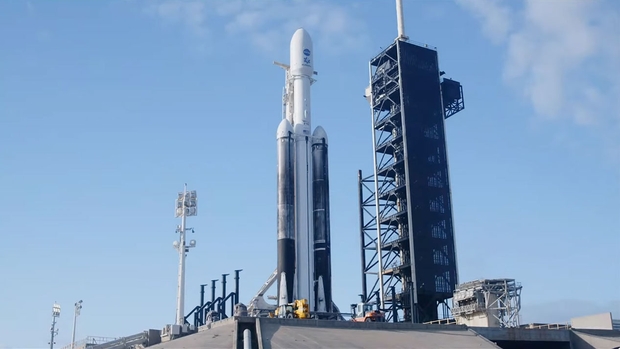
Photo Credit: NASA.
In less than 24 hours, NASA's @EuropaClipper spacecraft is slated to launch from @NASAKennedy in Florida aboard a @SpaceX Falcon Heavy rocket.
Tune in at 2pm PT / 5pm ET as experts discuss the prelaunch status of the mission. https://t.co/Nq36BeKieX
— NASA JPL (@NASAJPL) October 13, 2024
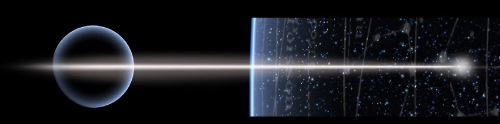


Long awaited for sure
25 km from the surface will, IIRC, be the closest flyby of any space probe to any planet or moon. Even the Dawn mission to Vesta and Ceres did not get closer. This implies that we should get spectacularly detailed surface images of Europa, which are even better than we have of Mars (depending on the imaging system). Each mission to Jupiter has increased the surface details returned from Europa, but this mission should offer a highly detailed map of the surface for scientists and laymen to examine. It is a pity we can be sure that we won’t find a dark rectangular object on the surface. ;-P But what we might discover…
Europa Clipper is on its way to Jupiter!
https://www.space.com/spacex-falcon-heavy-europa-clipper-launch
Now we await the flood of these memes…
https://www.youtube.com/watch?v=38EDhpxzn2g
I wonder what the cost saving was by using the FH in expendible mode vs the SLS had it been used. The SLS would only save on reduced operations costs due to the shorter travel time which I doubt would offset its huge launch costs.
It really shows that we need more powerful propulsion systems for space probes and space ships. Would orbiting space tugs be teh solution? More complex than a simpler Earth launch, compared to orbital insersertion, rendesvous, and then acceleration for the interplanetary travel on a faster (hyperbolic?) trajectory. The tugs could be standardized to reduce costs, and propulsion should be more energetic, whether high thrust chemical or nuclear, or low thrust electric or sail. The 1-year travel to Jupiter claimed by the Wind Rider authors would be the ticket…if it worked as advertized. But however propulsion technology advances, much faster interplanetary travel would be very useful, especially for missions to quickly follow up discoveries.Interplanetary travel today is slower than sailing ships during the Age of Exploration.
alex.
Do you know you often spell the word ” the” wrong, as in “teh? Set your auto correct. I always first read you comments, they are the most incisive.
Deanna,
Obviously, my typing is the root cause, but I think that I once added this spelling to Grammarly and I have no way to excise it, so Grammarly does not flag it as an error. When I submit articles I usually run a global replace to correct that particular misspelling. Sometimes I write my comment in another application and do the global replacement before copying and pasting the text into the comment box. [Interestingly when I just tried to type “t-e-h” it is auto-corrected in the comment box, which leaves me somewhat confused about the flagging of the error.]
Glad to know I’m not the only one who remembers the Wind Rider.
So the hard part is over, Mars is next February 27, 2025.
Solar Arrays on NASA’s Europa Clipper Fully Deployed in Space
https://blogs.nasa.gov/europaclipper/2024/10/14/solar-arrays-on-nasas-europa-clipper-fully-deployed-in-space/
https://europa.nasa.gov/mission/timeline/
If the spacecraft electronics are not fried why impact it on Ganymede?
Let us not forget the poem engraved on a metal plate on the Europa Clipper:
https://europa.nasa.gov/spacecraft/vault-plate/
https://blogs.nasa.gov/europaclipper/2024/10/14/in-praise-of-mystery-a-poem-for-europa/
https://www.centauri-dreams.org/2024/03/13/inscribing-our-journey-to-europa/
The probe is supposed to be dropped on Ganymede at the end of its mission, no doubt to prevent Europa Clipper from contaminating its focus of study. I would like to know if this plate will survive intact, so that someone in the future may be able to find and read it?
I don’t suppose there is any way they can drop EC on that moon gently enough? Yes, I know it is bigger than Mercury, but I would like to think this message and its contents would survive somehow.