
Will 2026 be the year we detect life elsewhere in the universe? The odds seem against it, barring a spectacular find on Mars or an even more spectacular SETI detection that leaves no doubt of its nature. Otherwise, this new year will continue to see us refining large telescopes, working on next generation space observatories, and tuning up our methods for biosignature detection. All necessary work if we are to find life, but no guarantee of future success.
It is, let’s face it, frustrating for those of us with a science fictional bent to consider that all we have to go on is our own planet when it comes to life. We are sometimes reminded that an infinite number of lines can pass through a single point. And yes, it’s true that the raw materials of life seem plentiful in the cosmos, leading to the idea that living planets are everywhere. But we lack evidence. We have exactly that one data point – life as we know it on our own planet – and every theory, every line we run through it is guesswork.
I got interested enough in the line and the data point quote that I dug into its background. As far as I can find, Leonardo da Vinci wrote an early formulation of a mathematical truth that harks back to Euclid. In his notebooks, he says this:
“…the line has in itself neither matter nor substance and may rather be called an imaginary idea than a real object; and this being its nature it occupies no space. Therefore an infinite number of lines may be conceived of as intersecting each other at a point, which has no dimensions…”
It’s not the same argument, but close enough to intrigue me. I’ve just finished Jon Willis’ book The Pale Blue Data Point (University of Chicago Press, 2025), a study addressing precisely this issue. The title, of course, recalls the wonderful ‘pale blue dot’ photo taken from Voyager 1 in 1990. Here Earth itself is indeed a mere point, caught within a line of scattered light that is an artifact of the camera’s optics. How many lines can we draw through this point?
We’ve made interesting use of that data point in a unique flyby mission. In December, 1990 the Galileo spacecraft performed the first of two flybys of Earth as part of its strategy for reaching Jupiter. Carl Sagan and team used the flyby as a test case for detecting life and, indeed, technosignatures. Imaging cameras, a spectrometer and radio receivers examined our planet, recording temperatures and identifying the presence of water. Oxygen and methane turned up, evidence that something was replenishing the balance. The spacecraft’s plasma wave experiment detected narrow band emissions, strong signs of a technological, broadcasting civilization.

Image: The Pale Blue Dot is a photograph of Earth taken Feb. 14, 1990, by NASA’s Voyager 1 at a distance of 3.7 billion miles (6 billion kilometers) from the Sun. The image inspired the title of scientist Carl Sagan’s book, Pale Blue Dot: A Vision of the Human Future in Space, in which he wrote: “Look again at that dot. That’s here. That’s home. That’s us.” NASA/JPL-Caltech.
So that’s a use of Earth that comes from the outside looking in. Philosophically, we might be tempted to throw up our hands when it comes to applying knowledge of life on Earth to our expectations of what we’ll find elsewhere. But we have no other source, so we learn from experiments like this. What Willis wants to do is to look at the ways we can use facilities and discoveries here on Earth to make our suppositions as tenable as possible. To that end, he travels over the globe seeking out environs as diverse as the deep ocean’s black smokers, the meteorite littered sands of Morocco’s Sahara and Chile’s high desert.
It’s a lively read. You may remember Willis as the author of All These Worlds Are Yours: The Scientific Search for Alien Life (Yale University Press, 2016), a precursor volume of sorts that takes a deep look at the Solar System’s planets, speculating on what we may learn around stars other than our own. This volume complements the earlier work nicely, in emphasizing the rigor that is critical in approaching astrobiology with terrestrial analogies. It’s also a heartening work, because in the end the sense of life’s tenacity in all the environments Willis studies cannot help but make the reader optimistic.
Optimistic, that is, if you are a person who finds solace and even joy in the idea that humanity is not alone in the universe. I certainly share that sense, but some day we need to dig into philosophy a bit to talk about why we feel like this.
Willis, though, is not into philosophy, but rather tangible science. The deep ocean pointedly mirrors our thinking about Europa and the now familiar (though surprising in its time) discovery by the Galileo probe that this unusual moon contained an ocean. The environment off northwestern Canada, in a region known as the Juan Fuca Plate, could not appear more unearthly than what we may find at Europa if we ever get a probe somehow underneath the ice.
The Endeavor hydrothermal vent system in this area is one of Earth’s most dramatic, a region of giant tube worms and eyeless shrimp, among other striking adaptations. Vent fluids produce infrared radiation, an outcome that evolution developed to allow these shrimp a primitive form of navigation.
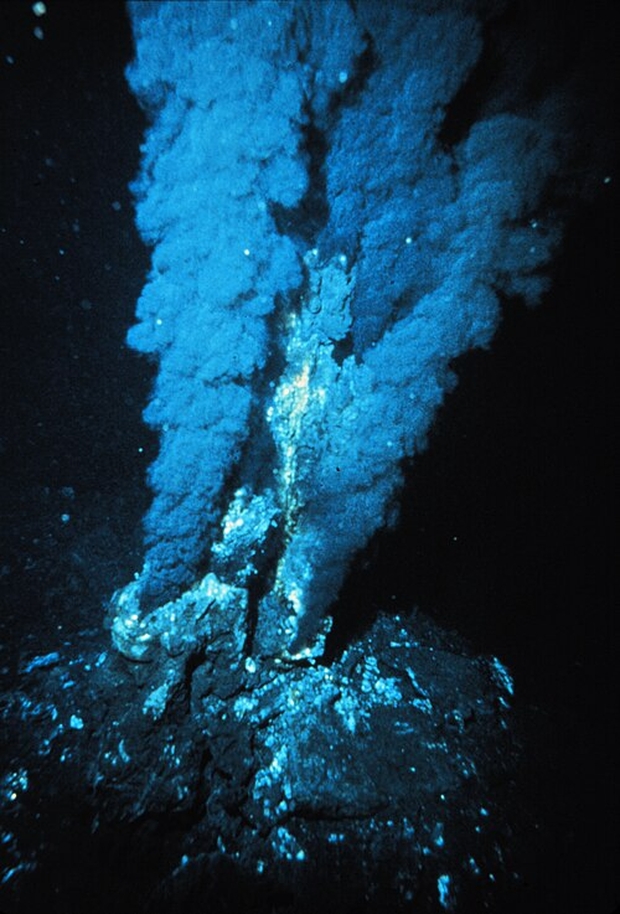
Image: A black smoker at the ocean floor. Will we find anything resembling this on moons like Europa? Credit: NOAA.
Here’s Willis reflecting on what he sees from the surface vessel Nautilus as it manages two remotely operated submersibles deep below. Unfolding on its computer screens is a bizarre vision of smoking ‘chimneys’ in a landscape he can only describe as ‘seemingly industrial.’ These towering structures, one of them 45 feet high, show the visual cues of powering life through geological heat and chemistry. Could a future ROV find something like this inside Europa?
It is interesting to note that the radiation produced by hydrothermal vents occurs at infrared wavelengths similar to those produced by cool, dim red dwarf stars such as Proxima Centauri, the closest star to our Sun and one that hosts its own Earth-sized rocky planet. Are there as yet any undiscovered terrestrial microbes at hydrothermal vents that have adapted the biochemistry of photosynthesis to exploit this abundant supply of infrared photons in the otherwise black abyss? Might such extreme terrestrial microbes offer an unexpected vision of life beyond the solar system?
The questions that vistas like this spawn are endless, but they give us a handle on possibilities we might not otherwise possess. After all, the first black smokers were discovered as recently as 1979. Before that, any hypothesized ocean on an icy Jovian moon would doubtless have been considered sterile. Willis goes on:
It is a far-out idea that remains speculation — the typical photon energy emitted from Proxima Centauri is five times greater than that emerging from a hydrothermal vent. However, the potential it offers us to imagine a truly alien photosynthesis operating under the feeble glow of a dim and distant sun makes me reluctant to dismiss it without further exploration of the wonders exhibited by hydrothermal vents.
We can also attack the issue of astrobiology through evidence that comes to us from space. In Morocco, Willis travels with a party that prospects for meteorites in the desert country that is considered prime hunting ground because meteorites stand out against local rock. He doesn’t find any himself, but his chapter on these ‘fallen stars’ is rich in reconsideration of Earth’s own past. For just as some meteorites help us glimpse ancient material from the formation of the Solar System, other ancient evidence comes from our landings at asteroid Ryugu and Bennu, where we can analyze chemical and mineral patterns that offer clues to the parent object’s origins.
It’s interesting to be reminded that when we find meteorites of Martian origin, we are dealing with a planet whose surface rocks are generally much older than those we find on Earth, most of which are less than 100 million years old. Mars by contrast has a surface half of which is made up of 3 billion year old rocks. Mars is the origin of famous meteorite ALH84001, briefly a news sensation given claims for possible fossils therein. Fortunately our rovers have proven themselves in the Martian environment, with Curiosity still viable after thirteen Earth years, and Perseverance after almost five. Sample return from Mars remains a goal astrobiologists dream about.
Are there connections between the Archean Earth and the Mars of today? Analyzing the stromatolite fossils in rocks of the Pilbara Craton of northwest Australia, the peripatetic Willis tells us they are 3.5 billion years old, yet evidence for what some see as cyanobacteria-like fossils can nonetheless be found here, part of continuing scientific debate. The substance of the debate is itself informative: Do we claim evidence for life only as a last resort, or do we accept a notion of what early life should look like and proceed to identify it? New analytical tools and techniques continue to reshape the argument.
Even older Earth rocks, 4 billion years old, can be found at the Acasta River north of Yellowknife in Canada’s Northwest Territories. Earth itself is now estimated to be 4.54 billion years old (meteorite evidence is useful here), but there are at least some signs that surface water, that indispensable factor in the emergence of life as we know it, may have existed earlier than we thought.
We’re way into the bleeding edge here, but there are some zircon crystals that date back to 4.4 billion years, and in a controversial article in Nature from 2001, oceans and a continental crust are argued to have existed at the 4.4 billion year mark. This is a direct challenge to the widely accepted view that the Hadean Earth was indeed the molten hell we’ve long imagined. This would have been a very early Earth with a now solid crust and significant amounts of water. Here’s Willis speculating on what a confirmation of this view would entail:
Contrary to long-standing thought, the Hadean Earth may have been ‘born wet; and experienced a long history of liquid water on its surface. Using the modern astrobiological definition of the word, Earth was habitable from the earliest of epochs. Perhaps not continuously, though, as the Solar System contained a turbulent and violent environment. Yet fleeting conditions on the early Earth may have allowed the great chemistry experiment that we call life to have got underway much earlier than previously thought.
We can think of life, as Willis notes, in terms of what defines its appearance on Earth. This would be order, metabolism and the capacity for evolving. But because we are dealing with a process and not a quantity, we’re confounded by the fact that there are no standard ‘units’ by which we can measure life. Now consider that we must gather our evidence on other worlds by, at best, samples returned to us by spacecraft as well as the data from spectroscopic analysis of distant atmospheres. We end up with the simplest of questions: What does life do? If order, metabolism and evolution are central, must they appear at the same time, and do we even know if they did this on our own ancient Earth?
Willis is canny enough not to imply that we are close to breakthrough in any area of life detection, even in the chapter on SETI, where he discusses dolphin language and the principles of cross-species communication in the context of searching the skies. I think humility is an essential requirement for a career choice in astrobiology, for we may have decades ahead of us without any confirmation of life elsewhere, Mars being the possible exception. Biosignature results from terrestrial-class exoplanets around M-dwarfs will likely offer suggestive hints, but screening them for abiotic explanations will take time.
So I think this is a cautionary tone in which to end the book, as Willis does:
…being an expert on terrestrial oceans does not necessarily make one an expert on Europan or Enceladan ones, let alone any life they might contain. However…it doesn’t make one a complete newbie either. Perhaps that reticence comes from a form of impostor syndrome, as if discovering alien life is the minimum entry fee to an exclusive club. Yet the secret to being an astrobiologist, as in all other fields of scientific research, is to apply what you do know to answer questions that truly matter – all the while remaining aware that whatever knowledge you do possess is guaranteed to be incomplete, likely misleading, and possibly even wrong. Given that the odds appear to be stacked against us, who might be brave enough to even try?
But of course trying is what astrobiologists do, moving beyond their individual fields into the mysterious realm where disciplines converge, the ground rules are uncertain, and the science of things unseen but hinted at begins to take shape. Cocconi and Morrison famously pointed out in their groundbreaking 1959 article launching the field of SETI that the odds of success were unknown, but not searching at all was the best way to guarantee that the result would be zero.
We’d love to find a signal so obviously technological and definitely interstellar that the case is proven, but as with biosignatures, what we find is at best suggestive. We may be, as some suggest, within a decade or two of some kind of confirmation, but as this new year begins, I think the story of our century in astrobiology is going to be the huge challenge of untangling ambiguous results.



Sherlock Holmes quote: “When you have eliminated the impossible, whatever remains, however improbable, must be the truth.”
“The substance of the debate is itself informative: Do we claim evidence for life only as a last resort, or do we accept a notion of what early life should look like and proceed to identify it?”
Finding life, intelligent or otherwise, in some other location other than one’s own planet is inherently a difficult task. There is an ever-growing collection of evidence to indicate that it is only a matter of time before such life is found. Although the search must continue, it may also be time to consider in greater detail what we are to do once it is discovered. Not searching at all is the best way to guarantee that the result would be zero.
“I think humility is an essential requirement for a career choice in astrobiology, for we may have decades ahead of us without any confirmation of life elsewhere, Mars being the possible exception. Biosignature results from terrestrial-class exoplanets around M-dwarfs will likely offer suggestive hints, but screening them for abiotic explanations will take time.”
It inevitably requires considerable patience and dedication to detect subtle signs of life. This should not deter us from pursuing the next steps. If we proceed with the concept that life is not all that rare, then we must proceed to the next question of why we don’t see intelligent life.
Carl Sagan: “Absence of evidence is not evidence of absence,”
“We’d love to find a signal so obviously technological and definitely interstellar that the case is proven, but as with biosignatures, what we find is at best suggestive.”
If life is not rare in the universe, then the next question would be what is it about technology and civilizations?
There appears to be a connection between the end of civilizations on our planet. Investigating this question is more than academic curiosity, as it may have profound implications for us now.
While notproving IR can drive photosynthesis entirely, these 2 papers indicate that the red limit for photosynthesis is pushed beyond the previously accepted wavelength limit. I would expect this to be enough for the Bolzmann wavelength distribution to drive photosynthesis on planets of at least some M_dwarf stars.
Substantial near-infrared radiation-driven photosynthesis of chlorophyll f-containing cyanobacteria in a natural habitat
Photochemistry beyond the red limit in chlorophyll f–containing photosystems
Is this the limit, or can photosynthetic systems evolve to work at even longer wavelengths?
As for the general forms of complex life, we know that physics results in convergent evolution of forms of different phyla. This suggests that we may find analogs of terrestrial life on other worlds. Does the same apply to ecosystems and food chains? If so, life may look different in detail, but not in overall networks and interrelationships.
But really different forms of life and ecosystems are what we would find to be really exciting for study and to extend the frontiers of biology.
Hi Paul
Very interesting reading and a lot to think about.
Cheers Edwin
If I summarize quickly : “let’s look under our noses to find what *can* be up there and search up there to understand if we are alone in the aquarium (and therefore why we are here)” :) There is in all this a little ‘Greek mythology’ side and rather amusing torture of Tantalus, but after all which would question the universe if we didn’t exist ?
Best wishes from bio-techno-signature to all !
You may recall that Paul Davies has speculated about a “shadow biosphere” on Earth, with life that we miss due to its different biology. It was the mistaken analysis of the “arsenic life” (arsenic replacing phosphorus) that caused such a controversy 15 years ago, and now the paper has been retracted by Science.
‘Arsenic Life’ Microbe Study Retracted after 15 Years of Controversy
This doesn’t mean we should stop looking for different life on Earth. It would have to be so very different not to be out-competed by our LUCA-ancestral life, or live in an environment inaccessible even to extremophiles.
We have still not found even a large fraction of all the species on Earth. Mostof the new species are very small, but occasionally a new vertebrate is discovered. Environmental DNA analysis finds new clades of viruses, prokaryotes, and eukaryotes. Our discovery techniques would fail to detect clades with very different biology, e.g., using a different information storage molecule than DNA. That life would have to be visible and recognizable as life to be detected. Nothing has emerged….so far. We haven’t yet had much chance to sample other bodies in our solar system for life, but that is changing.
Actually, a single data point does tell us quite a lot.
1) We know life arose very quickly after the formation of the earth, which suggests microbial life arises easily and is common throughout the universe, providing conditions are not too extreme, for a long enough time.
2) We know advanced life, eukaryotic multicellular organisms, evolved rather late in earth’s history, suggesting that few of the life-bearing worlds in the Galaxy will host creatures comparable to terrestrial vertebrates in complexity.
3) The earth’s example shows us life, once established, can survive (and even flourish) under drastic changes in planetary climate, vulcanism, meteoric bombardment and atmosphere composition.
4) We can safely conclude that the presence of a massive satellite, oceanic tides, plate tectonics and a strong magnetic field on our world, not to mention long term solar stability, are positive indicators for the presence of life. OTOH, we can’t say with any certainty that these factors are a necessary, as well as sufficient, condition for life. We simply don’t know enough to say that any of these planetary characteristics are required for life to evolve.
5) I believe it is safe to rule out close binary companions to our candidate star. Not only is there a potential for tidal disruption of planetary orbits, but a massive companion will evolve more rapidly than the life-friendly, stable star. For a binary to have life, the star with life-bearing planets must be far enough away from the more massive (faster evolving) star so that it is not affected by novae, supergiant stages, planetary nebulae or other catastrophes peculiar to more massive stars earlier in their history.
6) The arising of “intelligence” here occurred so long after the first appearance of life that it suggests that it is NOT an inevitable result of increased evolutionary complexity. The fact that it developed so quickly after it did finally arise also suggests that it is an accidental, random event rather than an expected step in the evolution of planetary civilizations. We also have compelling evidence to suggest that intelligence in one species is not necessarily a survival trait, and that it may be a threat to the entire ecosystem in which it appears. We also have no evidence that intelligence inevitably leads to technologies useful for interstellar communication or travel, or even for the generation of technosignatures.
I know there are a lot of “suggests” in this list, but I don’t think any of those conclusions is untenable. The fact a technical civilization arose on this planet in spite of its long and turbulent history is good news for SETI. It is the task of astrophysics and astrobiology to determine just how often and for how long conditions similar to Earth’s occur in the cosmos. Even if we can’t determine how life (and even sentient life) is distributed, we should be able to make some pretty valid statistical predictions.
Not only is it likely that our intelligence arose after a longer period of gestation in predecessor species in our lineage, but even when H. Sapiens appeared, it was a very long time before the “cultural explosion” kick-started our ascendance to civilization, and then many millennia before we invented a mode of thinking that allowed us to become supremely adept in science and technology, which exploded within a few hundred years. This seems very accidental, given the false starts earlier civilizations made.
Regarding intelligence and technology being an anti-survival trait, as the Chinese might say, “It is too early to tell.” However, the auguries don’t bode well.
Here is a fun thought. Suppose that an amphibian or reptilian species had gained sufficient intelligence to develop technology like the Silurians in Doctor Who). What if the Permian-Triassic extinction, supposedly caused by massive eruptions releasing CO2 into the atmosphere, was really the result of early industrialization as the species learned to control fire? Could this be the true cause of that mass extinction?
Item 6 raises several compelling points that warrant further inquiry.
1) Intelligence may not constitute a definitive survival trait.
2) Intelligence does not necessarily produce enduring evidence of its existence.
a) Given the scarcity of identifiable indicators, intelligence may have emerged
much earlier than current records suggest.
b) If intelligence is not a survival trait, this may explain its apparent rarity.
c) Intelligence may have arisen independently on multiple occasions and at
much earlier periods.
d) Available records suggest that intelligence, or at least the potential for it, has
emerged on numerous occasions.
3) The emergence of intelligence does not necessarily result in the development
of technology.
a) As noted in a later post, cetaceans and cephalopods originated tens or even
hundreds of millions of years ago. Their aquatic environments have
significantly constrained their capacity to develop various technologies.
b) Multiple hominid species have emerged within the past hundreds of millions
of years. It is well established that several of these species, aside from Homo
sapiens, developed some degree of technological capability.
4) These observations indicate a potential relationship between intelligence,
technological development, and the emergence of civilizations.
a) In what ways does technology facilitate the emergence of civilizations?
b) What risk factors associated with technology could contribute to the collapse
of civilizations or species?
c) How does technology contribute to the advancement of civilizations?
d) What risk factors specifically threaten intelligence and civilizations, as distinct
from those affecting species in general?
5) If intelligence, technology, or civilizations possess negative survival traits, it is
essential to identify and study these issues while mitigation remains possible.
It is important to define intelligence. In the animal kingdom, intelligence is usually thought of as involving behaviours that improve survival rather than just random behaviors. This is often seen as a stereotypical response to insults or threats, food location algorithms, and eventually reasoning. It is therefore seen in some of the most primitive cells and onwards through evolution. In the vertebrates, the brain-to-body ratio increases with each new type, e.g., orders of fish, amphibians, reptiles, birds, and mammals. While this doesn’t prove it is a survival trait, evolution clearly drives this ratio. This is possible because the most fierce competitor is a member of your own species, and therefore, intelligence improves an individual’s chances of reproductive success.
Again, we should be careful about the meaning of technology. It can be as simple as using a twig to extract ants from an anthill by chimpanzees, or the building of dams by beavers, or using local materials to build nests and shelters. Humans extended this with knapping flints as sharp tools, extending their killing range with spears and arrows, and using tools to manufacture other objects, such as adornments, etc., etc.
What we think of technology is really high-technology [relative to the technology before the Industrial Revolution].
Your timeline is somewhat exaggerated. The genus Homo appeared perhaps around 3 million years ago. The Hominins appeared about 7-8 million years ago when the human lineage split off from the apes. Even primates didn’t appear at the most, 90 mya.
While the ape line used stones, only the human line chipped flints and used fire. The cultural explosion that occurred 40-80,000 years ago saw the rapid development of our brains and capabilities, and probably not coincidentally saw the end of the competing Homo species, leaving H. Sapiens as the only Homo surviving to use available resources. If that isn’t a “survival trait,” I don’t know what is.
Expertise in a technology requires specialization. Whether making weapons, fighting, growing crops, animal husbandry, organizing the specialities, and managing the polity to prevent other polities from successfully invading, the need to organize the specialities to work cohesively results in a new ape-based hierarchical order as teh basis of civilization. Building a defensible shelter that became a city is the basis of the word civilization. The defining technology to do this was language, and later codification with writing. Civilizations then become ever more complex. Tainter has suggested that the increase in complexity becomes too great, and some event[s] result in a local civilization’s collapse. Now, we have a very complex, global civilization, where the need to coordinate responses to common problems seems to evade our capabilities.
The economist, Brian Arthur, has written about how technologies become a combinatorial explosion, facilitating new technologies at an ever-increasing rate. Just look at how fast computer technology has evolved over the past century. It has become cheap and ubiquitous, with a flowering of computer languages to make it work in a wide variety of situations.
Computer systems already allow for a greatly increased complexity of our civilization, which would have overwhelmed a human-mechanical approach alone.
We may even be at the cusp of AI extending our civilizational complexity even further, beyond human brains’ ability to manage collectively.
Evolution shows that increasing specialization eventually leads to a dead end when the conditions change, or the algorithm driving the development of teh survival trait runs into some constraint. Animal species often increase in size and specialized phenotypes that become detrimental to reproductive success. Complexity, like entropy, increases, rather than decreases, until it becomes impossible to manage. A cycle of increasing complexity, followed by collapse, and the emergence of a low-complexity culture that starts the cycle over again. Resource limits may also play a part. Human population sizes were always limited by food production. It was a Malthusian world. The Industrial Revolution appears to have alleviated that constraint, at least for a while, but it may resurface as resources to maintain food production become depleted and climate change exacerbates production constraints.
We have plenty of prior civilizations to study. Our eventual collapse, if it happens, will add to the study list.
This topic is like an assignment: Come up with something?
Extremophile life is defined in terms of Earth’s contemporary conditions on the surface. And our particular manifestation ( i.e., “us”) is a very thin veneer in geological history. It causes us to sometime muse whether dinosaurs spent any of their considerable time on Earth on speculations of similar nature. Or for that matter, cetaceans who are still around and have been communicating among themselves for millions of years. So well that they needn’t have invented radio.
How long? Well from the Wikipedia:
“The evolution of cetaceans is thought to have begun in the Indian subcontinent from even-toed ungulates (Artiodactyla) 50 million years ago and to have proceeded over a period of at least 15 million years.”
Sounds so deliberate, doesn’t it. Over millions of years they “immersed themselves” more and more? And by inference we are led to the conjecture that birds did the same thing to gain flight? Through adaptation, one suspects, But if they failed? Looking at evolutionary history in this light, I am beginning to wonder if I have been asking the right questions when Earth has provide lessons.
Which does suggest that if we can’t find what we define as intelligence similar to what we seek in SETI, then perhaps there’s some chance that aliens are more like whales than we are? Seti-ceans? Or that should alien life actually come here to visit us, they might be more at home with the cetaceans than with ourselves. It might even come down to such factors that they live in a dense fluid, need no phones nor houses and – most importantly – are migratory. Otherwise they wouldn’t stop by.
Maybe it is not that Earth has taught us something about life, but Earthlike planets around red dwarf stars has taught us not to bank too much on their promise, what with ultraviolet flares and charged particles – unless you have a magnetosphere installed. Consequently, the planets with thick atmospheres and potentially deep oceans give one reason to contemplate about life’s prospects.
There is a possible paradox in the idea that oceans here and perhaps “there” are better suited for life’s manifestation than a surface such as the Earth’s, to which certain living entities crawled and over originally on a lark. But perhaps consequently, the notion of a space above an ocean and an atmosphere would seem more remote to the folk at the other end of SETI if they live in what we call a sea. The fluid variation can be more varied than the oceans provided here and a surface as such? It might be submerged flotsam if it exists at all. For worlds larger than Earth with atmospheres, the depth of the biosphere could be midway between space and the solid surface.
Then we have the fact that critters evolved elsewhere on Earth can continue to evolve near an undersea volcanic vent. Or do we really have here on Earth an ocean depth so deep that it bears no life? Shipwrecks at the bottom are re-cycled somehow.
Now and then attention is drawn to sea floor creatures like squid and octopods and their inherent intelligence, despite the fact their brains are not organized like ours but distributive processors; and that they have been around for at least 100 million years. Their lives are relatively short ( e.g., less than a decade), but some of them have communities. And in captivity they show considerable cunning and curiosity. Cephalopods go back 500 million years, but octopods and squid go back 150 and 170 million years respectively. Though clever it is difficult to say whether they have learned that much from being around that long. Should we discover that these creatures pass on any ideas or knowledge generation to generation that would be significant. Or if they do not, why? And if they were to do so, than what then?
One might say that if we have not yet encountered strange ETs, that these are Earth’s best efforts in inventing some. And if I am not mistaken, it sounds like they have been around longer than there have been mammals. The squid has some exo-skeleton, but since the octopod has no skeleton, it is difficult to trace its possible or mythic accomplishments.
The background scenario of Star Trek IV?
The solid surface was very important in whale evolution, as they were land dwellers before they returned to the sea, adapting their limbs. They remain air breathers, which supports their communication. Unlike other large marine animals, from cartilaginous fish like sharks, and reptiles like mosasaurs, only the cetaceans developed higher intelligence.
AFAICS, the only way that non-tool-using animals can pass along information from one generation to teh next is through instruction from elder to younger, perhaps even creating stories that can be passed on through the generations. So memetics via direct instruction by doing, and stories via some sort of language, perhaps through the use of skin chromatophores.
Are there other possibilities for marine animals, especially invertebrates?
Re linkages between/among intelligence, technology, and civilization: I’d echo much of what’s been stated, especially by Henry Cordova, Alex Tolley, and Dean Zierman. Rather than reiterate, I’ll mention some other points that I regard as pertinent.
1) Terrestrial (land-based) rather than aquatic. Here, the ability to start and use fire for technological purposes (e.g. smelting to extract metals from ores—fundamental to the flowering of metallurgy) seems like a determining attribute. Some have suggested that “hot smoker” vents in deep oceans could somehow facilitate metallurgy, but their arguments for this seem unconvincing.
2) The presence of hands (or similar appendages) with an opposable digit or digits offers a significant evolutionary advantage in terms of dexterity and manipulation. Again, it’s difficult to imagine how technological development would proceed without such an ability.
3) Imagination and “the mind’s eye,” meaning not only the ability to envision (visualize) the execution of a task from beginning to end, but also the creative insight(s) to design innovations and develop new tools to facilitate the process. Here, I’d point to the seminal work of one of my history of technology profs, the late Eugene S. Ferguson, in his article, “The Mind’s Eye: Nonverbal Thought in Technology,” Science, 26 August 1977, pp. 827-836, amplified in his book, Engineering and the Mind’s Eye (MIT Press, 1994).
4) Related to the above, two other technological factors seem crucial: first, the ability to devise and utilize simple machines (e.g., the screw, the inclined plane, the wedge, the wheel) to perform tasks and to combine them to form more complicated machinery. This, in turn, led to the development of kinematics—which, along with astronomy, spurred the rise of the physical sciences. Second, the ability to use tools to make more sophisticated tools. While many other animals developed the ability to use (manipulate) natural objects (e.g., sticks, stones, the ground) to perform simple tasks, only hominids developed the ability to fashion improved tools, and/or to use simple tools to fabricate more complex ones.
There are other abilities that could be listed, but considered as a whole, the ones I’ve listed would seem to argue for the rarity of technological civilizations in the universe—and very possibility, for the singularity of our technological civilization.
@John C Rumm
I like that concept of the opposable thumb being necessary, but insufficient, needing the imagination of the mind to be really useful for technology development.
Chimps have fairly decent opposable thumbs and big toes, but they have very limited technology. Perching birds can grasp items, but that is far more limited than an opposable thumb. I would also suggest that it is the fine motor control of the thumb and fingers that we have that gives us a major edge. Losing that motor control as we age or become ill (e.g., arthritic), severely limits what we can do with our hands.
If we posit humanity losing all its technological knowledge, how long would it take us to recreate it, from making fire and sharp flints, and beyond? The same long gestation period? Being educated and surrounded with tools, we cannot help but have our imaginations stimulated to create new ones and use existing ones in different ways. YouTube is a great source of tool-using memes that demonstrate human ingenuity.
I do find it interesting that octopi have remarkable dexterity with their tentacles. Is it possible that if they had minds to match ours, they could also develop some technologies over time?
>only hominids developed the ability to fashion improved tools, and/or to use simple tools to fabricate more complex ones
That’s right. The thumb and hand as a prehensible organ, allowed the cognitive development of the human brain. Fire allowed the transformation of matter to make tools but also a better ingestion of food, thus an extended lifespan, which allowed humans to *transmit their increasingly complex knowledge from generation to generation*.
But there is also the fact that the human species multiplied and strongly *socialized* [by sedentarization] at a certain moment of its development. What accentuated the exchange of ideas therefore a new increase in technology etc
In a ‘primitive’ group of hunter-gatherers, each individual had overall a basic task of daily survival (to feed, protect themselves, reproduce) and therefore probably little time to conceptualize; exchanges with their peers were rare. Its evolution has therefore been slow. It was only with the first civilizations that the development of the human species exploded.
One could therefore say that life has had 3 steps of development :
1) a “cellular” period which we can suppose to be common in space IF certain conditions are met
2) a more complex biological development which allows the embryo of concepts
here raises a question from neuroscience: what chemically allowed us to do this at the point of development when it did not occur in other animals ? (I don’t know :)
3) to end with a “thinking” form of life very elaborate capable of modeling one’s own environment according to one’s desires.
We could add a 4th step which would be that of the Man-machine that we are visibly in the process of crossing.
of this reasoning (which may be false?) one can therefore have two contradictory answers for the search for extraterrestrial Life: at the biochemical and “cellular stage” as LUCA, it is surely common in the universe; but at the complex stage which is ours, it can be unique because *the set* of factors that allowed our development to statistically unlikely to be repeated elsewhere.
we can therefore bet that we will soon find ‘cellular’ life thanks to our technology which allows exploring other worlds, but that meeting it with E.T won’t be for tomorrow…
On the scale of our galactic cluster, which is already large, I would be curious to know what the percentage of chances would be that a single “cellular” life form has technologically developed like us ?
What are we looking for? What are our references? It completely changes the debate
@fred
Given enough time, humanity may become the “Old Ones” creating all the alien cultures and species as we settle the galaxy. Cultures as new polities evolve. Species due to the genetic engineering of humans, uplifted animals, and even the creation artificial beings.
1-10 million years from now, the galaxy (and beyond) might be filled with all sorts of post-human cultures, new species, and non-biological (and/or hybrid cyborg) life. A true Banks’ “Culture” or Star Trek universe.
I just hope the “Great Filter,” if it is more than a philosophical idea, is behind, not in front, of us.
Alex Tolley, you are correct. While preparing my post, I made a cut-and-paste error. The intended phrase was ‘past million years’ rather than ‘hundreds of millions.’
The concepts of “The ability to envision (visualize) the execution of a task from beginning to end” and “An opposable digit or digits offers a significant evolutionary advantage in terms of dexterity and manipulation.”, brings up an interesting chicken or egg problem. Did the ability to perform these tasks evolve and then allow for the usage of these concepts, or was the minimum ability to accomplish these tasks that then led to the evolutionary pressure that greatly increased the ability to perform these tasks? In short, did the species evolve to better utilize the tools, or did the tools facilitate the evolution of the species? Could this concept also apply to technology and civilizations?
IMO, it is coevolutionary. An animal can learn to do things within its phenotype. For example, my cat cannot grasp objects to pick them up, but it can move them, and use its mouth to pick up objects and relocate it. Birds, similarly. An elephant can use its trunk to pick up objects, but that is about all it can do. Now look at human history. AFAIK, the use of grasping and wrist rotation was used to operate a key in a lock, which could be invented after sliding bolts, because we had that capability. But it required teh invention of the screw and screwdriver to allow us to learn how to do the rotation with just a thumb and forefinger for delicate screws.
Buut we have no capability to grasp a screw when it is positioned over a hole, or when it leaves a hole. The best we can do is to use magnetic materials and a magnet in the screwdriver to hold the screw outside of its hole. [How I wish for a screwdriver or attachment to easily grasp a non-magnetic screw. All I can do is use a pair of pliers in my other hand to manage this task where possible.] As equipment gets smaller, the ability to manipulate objects with hands directly gets ever harder. There is a reason women with more slender hands and fingers are preferred workers in electronics assembly factories.
Fortunately, our imaginations can devise tools to do things below our ability to see objects. Magnifying glasses and microscopes act as aids for our limited eyesight. We can devise molecular tools for even smaller tasks, such as manipulating DNA.
As our tool-using capabilities increase, our imaginations can devise new tools to extend our capabilities further. Just look at the new techniques that have appeared in a range of domains over even the past century. We can do things that were “unthinkable” decades ago. Just look at the techniques that have evolved in astronomy since this blog was started. What I find interesting is that intellectual tools are increasing, and often free to use, at least non-commercially. When I started programming in the late 1970s with access to personal programmable calculators and then computers, it cost money to buy a compiler and books to learn how to effectively use software languages. Now the compilers and interpreters are free, and while books are still available, so are free online tutorials. New algorithms are published that can be coded and used on data. Data is also more accessible, and scientific papers online provide access to data and software, as a means to replicate results as well as test other analyses. With an additive printer, one can design and build unique tools. As mentioned earlier, the internet is a great source for ideas that can be used and further adapted.
The more democratization extends tool using and building to more people, the faster the flowering of new tools and ideas will occur.
I was thinking about the coevolution of human skills and technology a long time ago, and whether the technology created a path dependency that affected our evolution as well. I no longer believe those ideas were novel, and certainly I have read others with the same or similar ideas since.
I think the best approach to looking for exosolar life and exosolar technological civilizations is to look for the broadest underling principles, so we don’t get caught up in the weeds.
And it seems to me that the arising of an intelligent technological species is the end product of the evolution of complexity from self replicating molecules. To go from simple Prokaryotic cells to Eukaryotic cells is an enormous jump in complexity. This can be seen in the increase in the size of the genome. Cellular instruction goes from mainly the construction of molecules to an increasingly complex computer like program that builds ever more sophisticated arrangements. This complexity grows in magnitude when it comes to programing the growth of the brain, and the larger and more complex the brain grows, the more complex the instruction set needs to be.
This process, from our knowledge of life evolving on Earth, takes a long time, maybe not as long as it did as on Earth but within the same order of magnitude.
Initially, life can evolve to tolerate a wide variety of physical/chemical environments, but as cells and organisms develop morphological complexity, their environmental tolerance decreases, so for a planet to give rise to intelligent life, it needs long periods of increasingly stable conditions.
From this it would seem that while life should be common throughout the galaxy, its evolution into more complex forms would require it to go through a series of ever higher jumps.
There is also another facet of this evolution of complexity, that is an increasing requirement of energy, which will condemn many places in which life evolves and the environment is stable for long periods of time to an upper level of complexity. From what we know from Earth, this would mean the equivalent energy source to that of photosynthesis. This would eliminate places like Enceladas and Europa as anything more that repositories of single-celled life.
From our knowledge of exosolar planets, it appears that the general formation sequence for planetary systems is for it to form a series of similar-sized planets in its disk, which migrate inwards. The size of these planets is proportional the the primary. For the smallest of Red-dwarfs, they are Earth-size. For solar mass stars, they are Neptune sized. Once you get to larger stars and ones with increasing metallicity, there is the increasing possibility that a Neptune mass core will undergo run away gas accretion forming a gas giant, which terminates the inflow of material interior to the giant planet. Most of these gas giants migrate inwards completely disrupting the inner system. Very rarely is this process halted allowing a relatively dry small planet to forming the habitable zone with oceans and continents. Most of the Earth-sized planets around M-dwarfs will have come from the outer system and therefor be deep ocean worlds. It would appear that the percentage of planets that meet the criterion for intelligent life is low, and so while life may be common throughout the galaxy, technological life could well be rare.
Searching for life throughout our solar system and a classification of the numbers and distribution of exosolar planets would very much help in our characterization of this.
I think we had a post about the hard steps in evolution that make intelligent, technological species very rare. A counter to this argument is covered in this brief Nautilus article.
We Might Not Be So Strange – Perhaps intelligent life wasn’t so unlikely after all
One of the last stages before we can get to technological, starfaring species is the development of the scientific method to advance science and technology.
I was just reading an essay on the economic and political conditions in Europe that allowed this to happen. This seems like another unlikely step. Were the conditions so unique to not repeat again, or was this inevitable, as the toss of an unbiased coin will eventually produce a long run of the same face?
What conditions would an alien species need to reach the same transition? Would it be a similar cultural evolution to that of our species, a different, but also unlikely path for the alien, or an easier path?
Lastly, is the Great Filter ahead, with an extremely hard passage for technological species to become a long-lived civilization, perhaps with starfaring capabilities? We have enjoyed a great run as a modern civilization, but what if this is just the last flowering of our species before we pass into extinction?
On account of some of the odd evidence the Earth provides, here (again?) is some devil’s advocacy:
When it comes to observing ourselves as a “species”, as is often the case in science fiction stories or discussing SETI, we present something like a resume of our accomplishments, speaking of our own “evolutionary” progress; a story that we share among ourselves. Soldering a record on the side of a Voyager, we hope that someone out there will share our view. Or else recognize it as the accomplishment of some creatures with gifts it takes some script to elaborate on.
That’s fine. And of late, instead of picturing ourselves or our ancestors facing a challenge like building a boat to traverse a lake, we consider our intelligence and ability to communicate in terms of traversing deep space by one means or another. This is fairly recent though, since I suspect that 18th century pioneers in celestial mechanics had a more passive relationship with the cosmos.
But to a certain extent we are judging present biota here and theoretical biota “out there” by these criteria: communicating or traveling between planets across space. So consequently, if an ET is not exploiting the radio band, then we would suppose that it is not part of a galactic club assembled remotely but acting akin to a European scientific academy. And it has only been a century or so that we have even been looking for the club.
I would like to get back to the case of the “ungulates” ( ancient buffalo or whatever) struggling for 15 million years to turn themselves into cetaceans.
That we accept that as simply biological evolutionary history obscures the oddity of these developments. Other transformations have occurred such as flightless dinosaurs learning to fly after a similar oddly forced march over millions of years.
Now I haven’t spoken with a buffalo or blue whale to verify an answer to this, but one could inquire which species now has the broader horizon: the whale or the water buffalo? And how would an ET interpret this?
So, correspondingly, if an alien were observing our struggle to get air and spaceborne, should they consider it as a feature of our intelligence or the same sort of “evolutionary” compulsion that turned some buffalos into whales?
We do not assume that the ungulates had an inherent understanding of what they were doing, but should we? I am not aware of an example of a mammal species first going into the water and then “evolving” back into a terrestrial species. Though to account for why we still have buffaloes maybe some of the ungulates witness to the initial effort recognized it as “folly”.
Sometimes I have to wonder about our celebratory progress parade. We could very well re-write the story to relate the climb from the shore to watch television and communicate with i-phones if ET has not already concluded this from notice of our preoccupations for the last century. At the very least there is some pragmatism in what has transpired thus far. The technology allowing spaceflight is integrated with others.
An ET observer of our own arguments for being part of a galactic club but not speaking in behalf of our other terrestrial/marine colleagues’ accomplishments, it might say, “Well, you just can’t have it both ways…”
I find your speculation/argument rather strange.
There was no “evolutionary compulsion. All that happened was that there were advantages for at least one population to find food in teh shallows a better survival strategy than foraging on land. This led to a slow adaptation to living in the ocean. Other animals have made partial moves in this direction, for example, seals and sealions. In a few million years, will they evolve into whales? Penguins may have evolved because of the lack of food and land predators in the Antarctic wastes, but abundant food in the coastal waters, despite marine predators, has a higher survival rate. IDK know what their earlier forms looked like, perhaps more like diving birds with feathered wings to fly and dive into the sea to feed?
No organism, whether at the individual or population level, has any inkling of the future based on incremental change via evolution. We certainly had no idea of the future we are in when I was young in the 1960s. I am sure even less so for anyone in any given culture several centuries ago. The idea that an animal could in any way contemplate where its future lay from its current evolutionary status seems untenable. If we try to look ahead, which new species future will we have, and can our current evolutionary status indicate the direction we will take? I would answer with a strong “No!”. Evolution has no direction, but is influenced by the factors of Darwinian natural selection based on the current conditions the population finds itself in. Those factors will influence the direction of evolution.
Regarding accomplishments. I think there is a difference in our evolutionary status and what our civilization[s] have done culturally that lies outside of our genotype and phenotype. All our cultural and technological tools have been invented and are distinct from our biology, which has not materially changed over millennia. We didn’t invent writing because of some genetic change in the population. Did some genetic change happen to allow us to conceive of rockets and spaceships, allowing us to have very basic travel outside of our planet’s atmosphere and most of the way past our gravity well?
I don’t believe an intelligent species would mistake our cultural and technological developments as a result of changing capabilities due to continued evolutionary changes. All I would allow is that certain traits allowed us some basic capabilities, such as more complex vocalizations that led to speech, manipulative hands that eventually led to writing, arts, and tool making, which in turn eventually led to our contemporary civilization. What other species has managed to change its behavior in significant ways after its incremental genetic changes, say, 10 or 100 millennia? Are any whale species doing anything very differently after a similar time period, and would being able to travel back in time show us any particular cetacean acting very differently in the past? We can travel into the future. Can we predict what any animal species will become, or be replaced by? While there are some lovely speculations, that is all they are.
If we look at ourselves, what lifestyle differences exist between us and our parents or grandparents? I would argue it is almost entirely cultural; genetics has almost nothing to do with the changes. Unless you want to extend evolution to “cultural evolution”, then evolution is no longer an important factor in our capabilities and behavioral changes.
I don’t believe they would ask that question. What they may ask is given our exploitative and somewhat dismissive attitudes to the other species we share our planet with, why should they allow such an intellectually impoverished species to join, much as elites look down on the “lower classes” and indicate such individuals are unsuitable to be in their “elevated” company? OTOH, they may ask, “Why have you remained in your biological state and not advanced to an efficient, more capable artificial form and remade your world to reflect this. You Earth grubs are unsuited to join us.”
@A.T.,
Thanks. I think you explored the question rather well. You spotted and explored the issues that were bothering me. Reflecting further on buffalo life vs. that of a whale or other member species of the migration, a whale until recent times had a world wide oceanic domain. Their migrations individually include oceans and great depths. Little even annoyed them until whalers came along.
They do seem to lack technologies or tool kit belts, but I don’t know for sure how an intelligent species from elsewhere would perceive that vs. our surface clutter. In contrast to this transformation completed perhaps 35 million years ago, our own heritage as tool makers goes back not tens of millions but a couple of million years, so far as I know. There are, of course, more lemming-like attempts of species to change their circumstances, of course, and evolutionary theory is inclusive enough with ready made obituaries for perceived failed efforts. Though often it is unclear what constitutes a successful run.
Reading Melville about whales, it is mystic enough to be an early form of science fiction. Or else science fiction in space can be sterilized sea stories. But despite all his face time with them in whale boats and processing on a sailing ship deck, observing their bones in the Sandwich Islands, Melville still thought that whales were fish. For such reasons I suspect we ( and ET out there) could still get cetaceans wrong.
I like the mentions of Archean and Hadean Earth. Past Earth is a source of data for astrobiology that seems underappreciated to me.
For instance, our planet’s atmosphere had atmospheric-oxygen concentrations comparable to present-day ones only since the early Paleozoic. For most of the Proterozoic, that concentration was some 0.01 – 0.1 times present concentration, and before that, even lower.
Also, continents drifted and grew, meaning less continent area in the past, and more ocean area.