
Until we get more assets in orbit around Saturn, we’re left to studying Cassini data on the fascinating moon Enceladus, findings that have already revealed much about geyser activity at the moon’s south polar region and its implications. New lab work is now procovative, as Alex Tolley reports in this morning’s essay. While we cannot claim a detection of life, it increasingly appears that the same kind of hot vents that allow life to flourish on the ocean floors of Earth produce nurturing conditions on Enceladus as well. Could an Earth organism survive in the rugged little moon’s ocean? As Alex explains, the recent experiments are more than a little encouraging. If a future mission finds evidence of microbes in the Enceladan ocean, we will have not only proven that life exists on another world, but that conditions common on icy moons may support living systems throughout the outer system.
by Alex Tolley
Introduction
Last year, 3i/Atlas, the interstellar comet, eclipsed the important reanalysis of the Cassini plume data. While the news speculated about whether Atlas was an alien probe, a Nature Astronomy paper concerning the reanalysis of the Cassini plume particles found a host of interesting organic molecules, more complex than hitherto found. Rather than simple molecules like methane (CH4), the analysis using mass spectrometry detected evidence of more complex multi-carbon compounds of different types, as shown in Figure 1. Click this image from the paper to enlarge it.
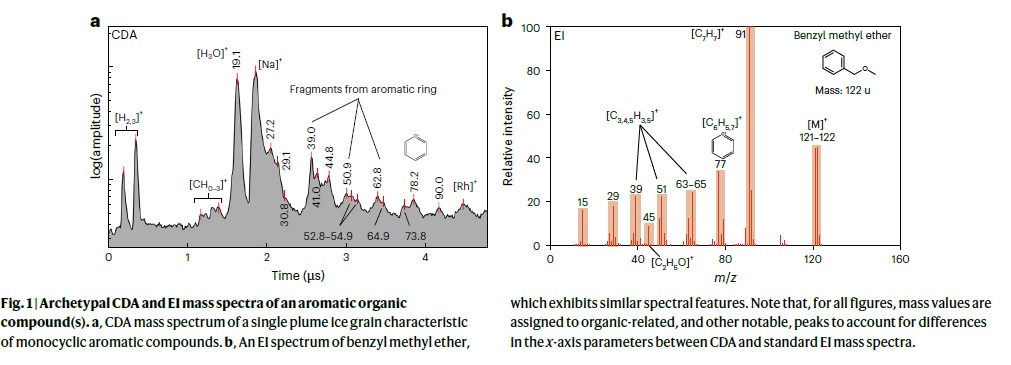
The carbon structures detected implied that more complex molecules existed in the plumes, but most interesting was that these structures are also part of biomolecules. In other words, some of these molecules could have come from organisms. Had Cassini found possible biosignatures of organisms that had been ejected from the sun-surface ocean?
Unfortunately, the molecules were not a smoking gun. All of them could have also had an abiotic origin, and not one required a known terrestrial biological synthesis route. The paper included a diagram showing the possible origin and pathways. Examination of the image shows that there are no definite biological molecules found, nor any biochemical pathway between the putative compounds. At best we might have another ambiguous biosignature.
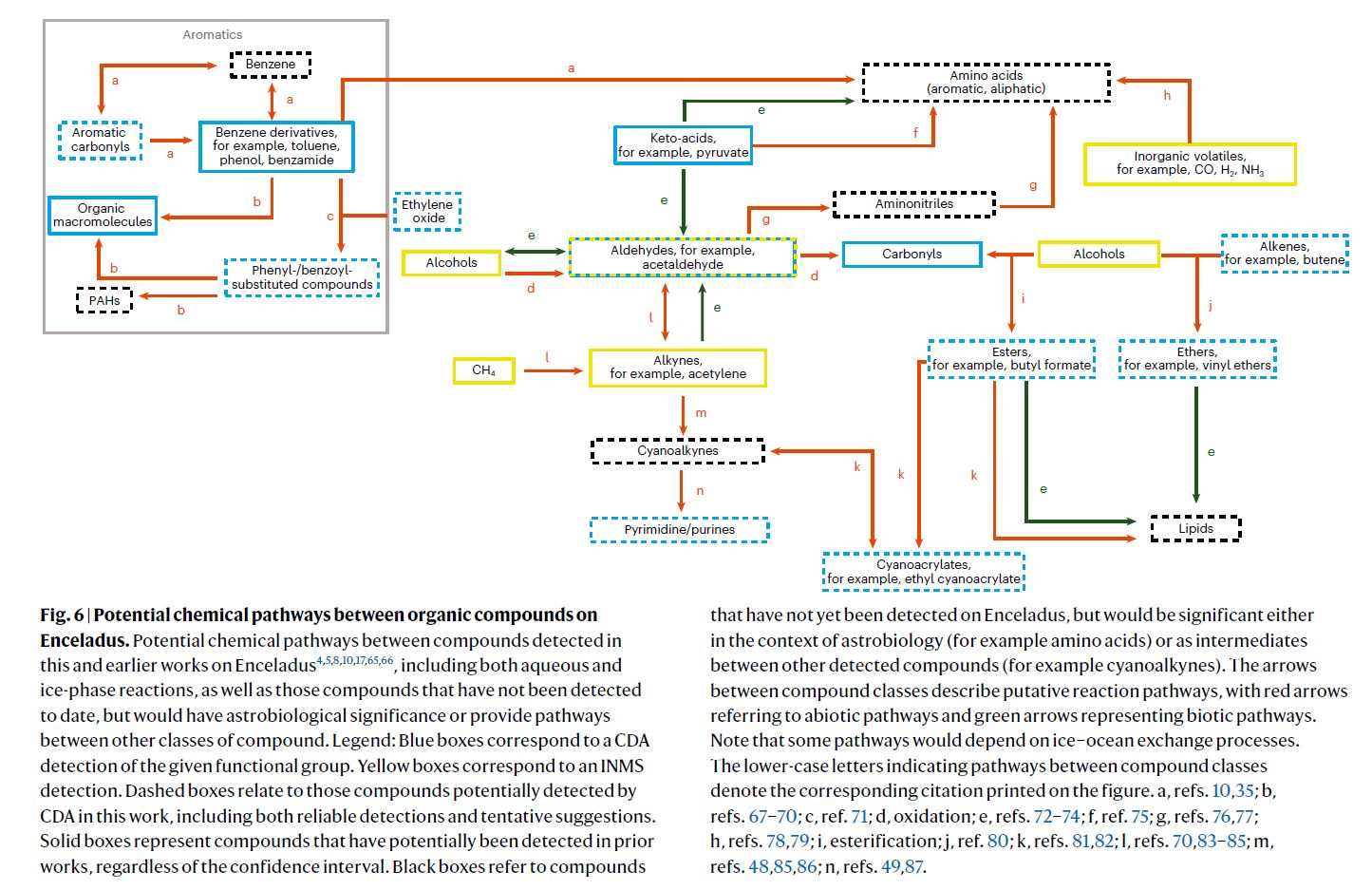
Figure 2 (click to enlarge). The structures, possible molecules, their origin, and pathways between them. No biological molecule was found, nor any biochemical pathway between the detected structures. (The original caption is included to explain the diagram),
An intriguing finding, but “no cigar.” An ambiguous finding that we must expect at this stage of biosignature detection.
Enceladus as an Abode for Life
Before I go into the microbe growth experiment, I should explain why Enceladus may be an interesting abode for life. The obvious, and simple, answer is NASA’s mantra “follow the water”. The shape of the Saturn-originated magnetic field data around Enceladus is best interpreted as due to a liquid ocean. The plumes that were detected at the South pole were largely composed of water ice, so we know that this ocean is large and must be above freezing, unlike the frozen ice crust above it. The plumes must be getting their energy from somewhere, and the best hypothesis is from a hot, rocky core.
Surface temperatures on Enceladus show that the South Pole is warmer than the rest of the surface, indicating a hot spot below that drives the plumes, rather like the Old Faithful geyser at Yellowstone National Park. Why should Enceladus have a hot core? It is a small moon, about 500 km in diameter. Any radioactive elements should have long since cooled. The best explanation is that tidal forces squeeze Enceladus, keeping at least pockets of the core hot. The thinking goes that ocean water seeping into the rocky core is heated and forms hot vents of a similar nature to those in the Earth’s oceans. As the Earth’s hot vents are surrounded by life from bacteria to complex life, so Enceladus’s ocean vents may also support life. One dominant hypothesis of Earth’s abiogenesis is that the conditions at the alkaline rocks at Earth’s hot vents create the needed hydrogen (H2) coupled with dissolved carbon dioxide (CO2) to provide the needed energy via methanogenesis for prokaryotic methanogens to grow. The archaea prokaryotes are predominantly methanogens and possibly the earliest form of extant life that emerged at these vents.
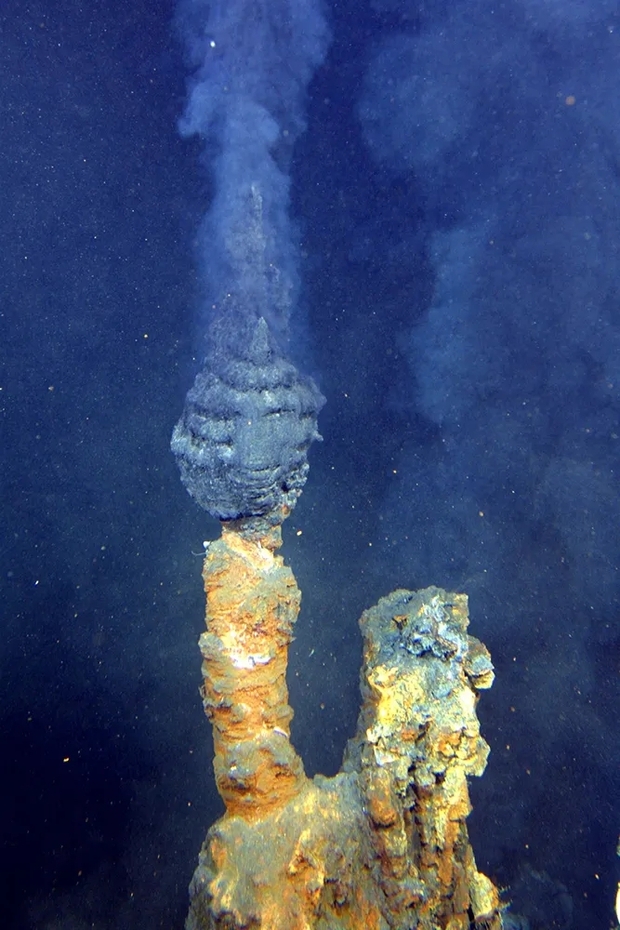
Image: Hot vent on Earth. Credit: NOAA
Are the Enceladan vents similar to Earth’s? The main difference is their temperature. On Earth, the vent water emerges around 400°C, whilst it is calculated that on Enceladus, the temperature is closer to 90°C. This makes little difference as the temperature rapidly declines away from the vent, much as the energy from a star declines with increasing orbital distance.
The ocean on Enceladus is 16-31 km deep, with an overlying ice crust of 20-25 km. However, as the gravity is just 1% of Earth’s, the pressure at the bottom of the ocean is equivalent to just 400-650 m on Earth, compared to Earth’s average ocean depth of 4 km. Therefore, we have a temperature and pressure at the Enceladan vents that are well within the range of Earth’s.
There is one difference from Earth’s ocean. The alkalinity of Earth’s oceans is generally neutral (pH 7) to mildly alkaline, although becoming more acidic due to increasing CO2 emissions. In some vent fields, the pH is as high as 8 [1]. By comparison, Enceladus ocean water is more alkaline with a pH of 11-12. Due to more sodium carbonate (Na2CO3) [2]
Growing terrestrial organisms in simulated Enceladan ocean medium
This year, the same team published a paper asking a different question. Could life be extant in the Enceladan ocean to create the detected organic compounds by Cassini? While we still await any possible future discovery of life, it is worth asking whether terrestrial life could survive and reproduce in the conditions of that ocean. If they can, then this proves that life could exist on Enceladus. If life were to exist in the ocean, it likely would occupy the same sort of hot vent habitat that microbes and complex life are found around Earth’s hot vents.
The first step was to concoct a simulant for the Enceladan ocean, an alkaline salt mixture [sodium chloride (NaCl), sodium carbonate (Na2CO3), and sodium bicarbonate (NaHCO3) with crushed rock that mimicked the likely rocky core at the base of the ocean. To simulate the hot vent, the ocean sample was kept at 65°C. This is a temperature that is too hot for most terrestrial organisms, except for thermophiles adapted to high temperatures. What sort of organisms would be suitable to test? The authors chose an archaeal methanogen that could extract energy from H2 generated by the serpentinization of the rock and the dissolved CO2. The chosen organism, Methanothermococcus okinawensis, was acquired from an ocean hot vent in a Pacific trench near Japan.
The Enceladan ocean simulant [EOS] was made to test 5 pH levels, 9, 9.5, 10, 10.5, and 11, and incubated with the microbes. The controls were an incubation with a standard culture medium for methanogens (MMC) with sodium hydroxide (NaOH) to adjust the pH to the same values as the EOS, and a sterile saline medium.
What did they discover?
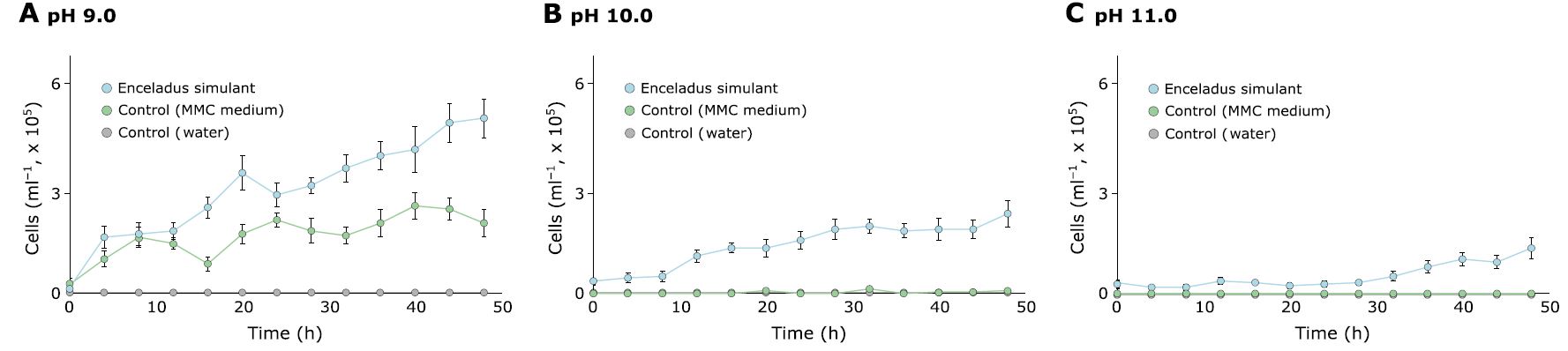
Figure 3 (click to enlarge). Cell growth in the 3 experimental alkaline conditions. Cell growth compared to the standard MMC culture for the organism and the sterile control. At pH greater than 9, only the simulated Enceladan ocean sample inoculum increased growth, while the MMC control showed no growth.
First, despite the low CO2 in the EOS, the microorganism extracted energy from the available H2 and CO2, as shown by the growth curves of the archean organisms over the 2-day experiment. A readout of their gene activity as RNA transcripts indicated that the organism over-expressed the genes in the acetyl-CoA pathway to reduce CO2 for fixation.
The methanogenesis reaction is an anaerobic respiration: CO2 + 4 H2 → CH4 + 2 H2O + energy
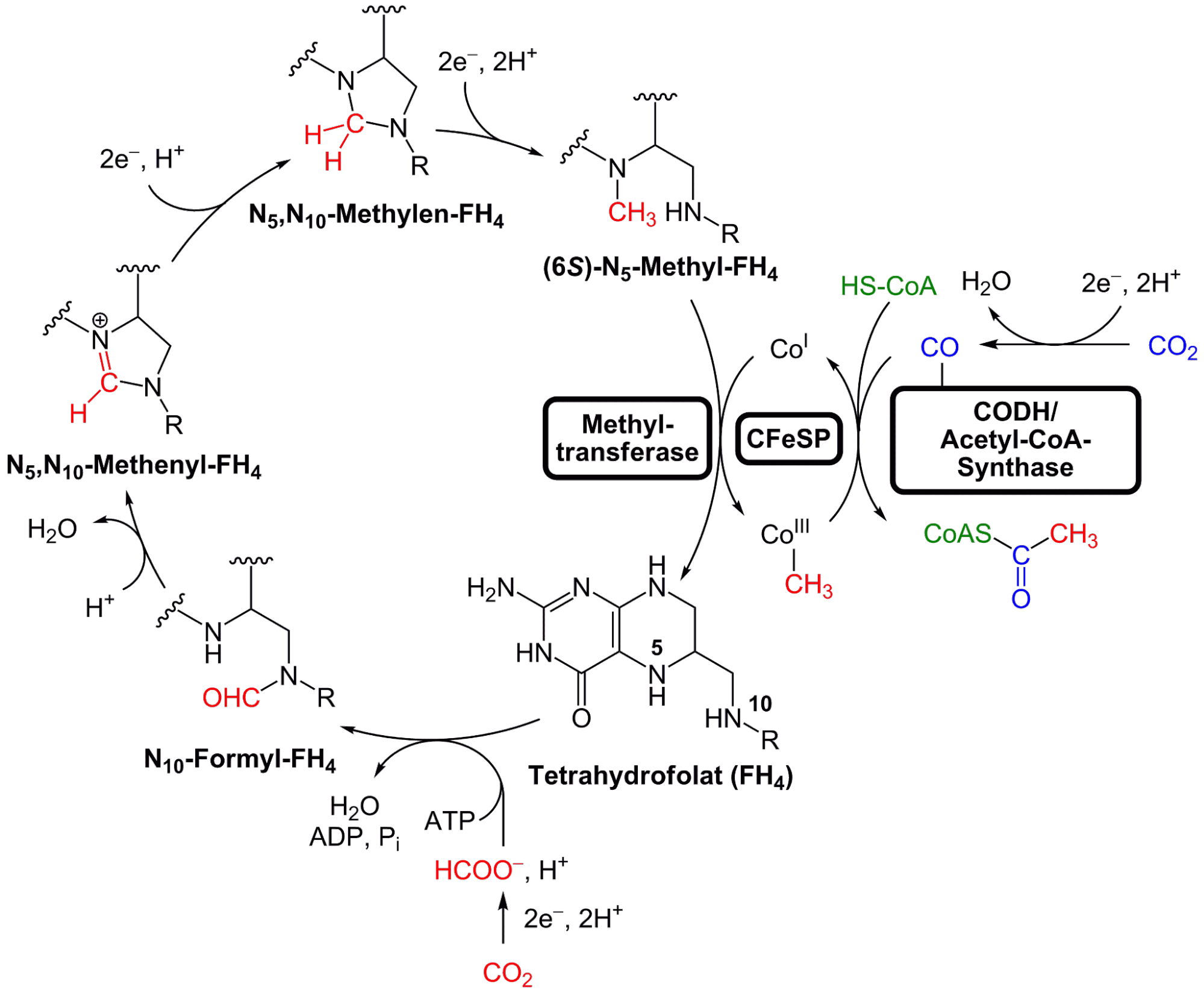
Figure 4 (click to enlarge). Reductive acetyl-CoA pathway in bacteria. CFeSP is a corrinoid iron-sulfur protein. The cyclic pathway consumes H2 and CO2 to fix carbon as acetyl-CoA, which is passed to other metabolic pathways for growth. – source: Wikipedia CC
To confirm that metabolism was occurring, the carbon source (sodium bicarbonate (NaHCO3), the source of CO2) was labelled with carbon-13 as a tracer. This tracer was detected in the released CH4, proving that the organism was responsible for the methanogenesis. [This type of labelled experiment was used to try to detect life with the Viking Mars landers in the 1970s.]
13CO2 + 4 H2 → 13CH4 + 2 H2O (the labeled carbon is transferred to the methane)
Second, the organisms were able to grow despite the alkalinity of the growth medium being beyond the range they were known to tolerate and survive. This adaptation seems to have been achieved by upregulation of the genes in the acetyl-CoA pathway. The experiment clearly demonstrates that a terrestrial organism could live at the hot vents at the bottom of the Enceladan ocean, at least as regards the experimental conditions allowed. While the experiment was not done at the pressure of their natural habitat, and that being greater than at the bottom of the Enceladan ocean, it seems unlikely that pressure was a constraint for such organisms.
The organisms would double their cell numbers about every 6 hours at the baseline conditions at pH 6.5 in MMC. Prior experiments had confirmed that these microbes could not survive in a terrestrial ocean above pH 8.5. At pH 9 in MMC, the growth rate was reduced, doubling in about 40 hours. By pH 10, the cells died. In the EOS condition, at pH 9 the cells doubled in about 23 hours, at pH 10 doubling in about 42 hours, and at pH 11 doubling was slowed to a calculated 126 hours. Although the growth rate was diminished as the pH was increased all the way to 11, the organisms were able to grow at the highest pH, which was well beyond the pH of their natural terrestrial habitat.
What this experiment proved was that a terrestrial organism, not adapted to Enceladus, was able to survive and grow if introduced to Enceladus around a hot vent, near the base of a plume, with an available heat source in the somewhat soda-like conditions of the ocean.
This is very significant, as it supports the earlier Cassini findings that the organic material extracted from the plumes could conceivably have come from organisms as well as an abiotic source. This doesn’t prove Enceladus has life, but that life can exist on Enceladus in the hot, dark conditions around vents at the rock-water interface, and would be worth searching for in a future mission.
It is worth noting that if these terrestrial microbes were introduced to a hot vent on Enceladus, the replication rate would fill that niche quickly due to the power of exponential growth.
Assuming that once that local niche was filled, further growth would be linear, as the new cells would be pushed out into the cold, near-freezing ocean in the plume. The cell density would be substantially reduced, but still detectable in the plume if intact. If the cells were destroyed as they froze, we might be able to detect cell fragments with sufficiently large collection volumes.
What would be exciting would be to detect biomolecules such as fragments of DNA, RNA, proteins, carbohydrates, or lipids in a sample. This could inform us whether any organisms were from a separate genesis, or from an introduction common to terrestrial organisms. Neither DNA, RNA, nor proteins were extracted from the Cassini plume analysis. Had there been, that would have been an unambiguous biosignature. We await a future mission to Enceladus, perhaps even a lander, to investigate further.
The paper about the Cassini plume analysis is: Khawaja, N., Postberg, F., O’Sullivan, T.R. et al. Detection of organic compounds in freshly ejected ice grains from Enceladus’s ocean. Nat Astron 9, 1662–1671 (2025). https://doi.org/10.1038/s41550-025-02655-y
The Experiment growing the methanogens in simulated Enceladan ocean water is: Helmbrecht, V., Postberg, F., Khawaja, N., Reichelt, R., Klein, F., Grohmann, D., & Orsi, W. D. (2026b). Enceladus-like geochemistry fuels methanogenesis under extreme CO 2 limitation. Science Advances, 12(39), eaei0167. https://doi.org/10.1126/sciadv.aei0167
References
1. Ocean vent. (n.d.). https://education.nationalgeographic.org/resource/ocean-vent/
2. Glein, C. R., Baross, J. A., & Waite, J. H. (2015). The pH of Enceladus’ ocean. Geochimica Et Cosmochimica Acta, 162, 202–219. https://doi.org/10.1016/j.gca.2015.04.017


0 Comments