
Until we get more assets in orbit around Saturn, we’re left to studying Cassini data on the fascinating moon Enceladus, findings that have already revealed much about geyser activity at the moon’s south polar region and its implications. New lab work is now procovative, as Alex Tolley reports in this morning’s essay. While we cannot claim a detection of life, it increasingly appears that the same kind of hot vents that allow life to flourish on the ocean floors of Earth produce nurturing conditions on Enceladus as well. Could an Earth organism survive in the rugged little moon’s ocean? As Alex explains, the recent experiments are more than a little encouraging. If a future mission finds evidence of microbes in the Enceladan ocean, we will have not only proven that life exists on another world, but that conditions common on icy moons may support living systems throughout the outer system.
by Alex Tolley
Introduction
Last year, 3i/Atlas, the interstellar comet, eclipsed the important reanalysis of the Cassini plume data. While the news speculated about whether Atlas was an alien probe, a Nature Astronomy paper concerning the reanalysis of the Cassini plume particles found a host of interesting organic molecules, more complex than hitherto found. Rather than simple molecules like methane (CH4), the analysis using mass spectrometry detected evidence of more complex multi-carbon compounds of different types, as shown in Figure 1. Click this image from the paper to enlarge it.
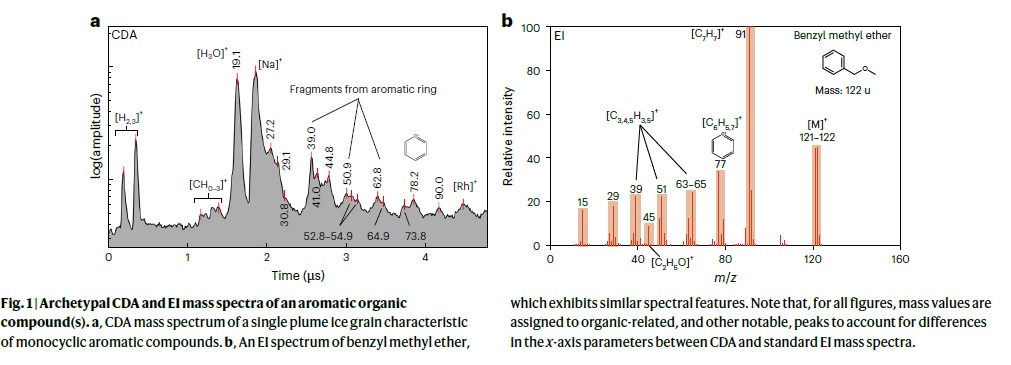
The carbon structures detected implied that more complex molecules existed in the plumes, but most interesting was that these structures are also part of biomolecules. In other words, some of these molecules could have come from organisms. Had Cassini found possible biosignatures of organisms that had been ejected from the sun-surface ocean?
Unfortunately, the molecules were not a smoking gun. All of them could have also had an abiotic origin, and not one required a known terrestrial biological synthesis route. The paper included a diagram showing the possible origin and pathways. Examination of the image shows that there are no definite biological molecules found, nor any biochemical pathway between the putative compounds. At best we might have another ambiguous biosignature.
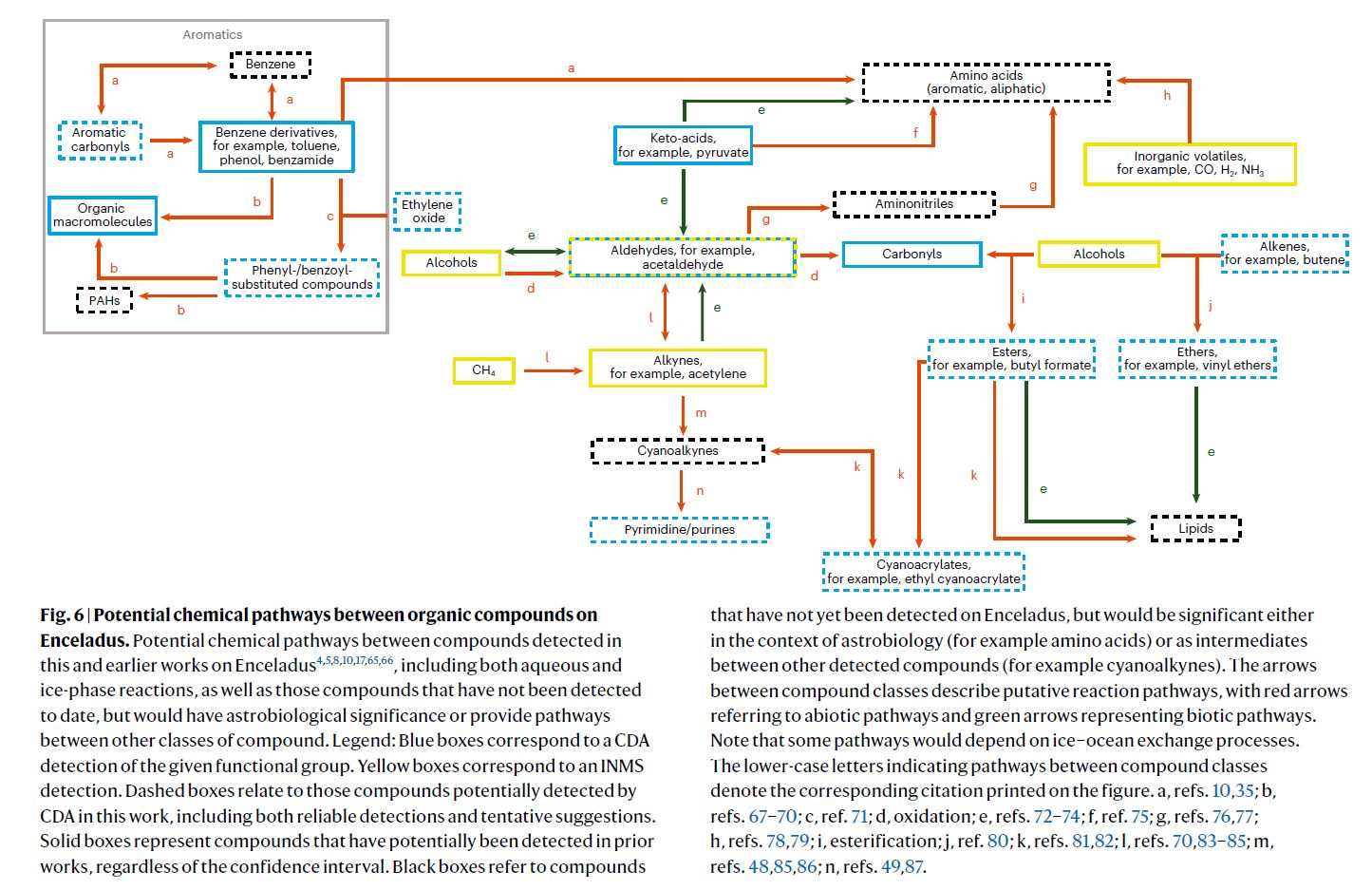
Figure 2 (click to enlarge). The structures, possible molecules, their origin, and pathways between them. No biological molecule was found, nor any biochemical pathway between the detected structures. (The original caption is included to explain the diagram),
An intriguing finding, but “no cigar.” An ambiguous finding that we must expect at this stage of biosignature detection.
Enceladus as an Abode for Life
Before I go into the microbe growth experiment, I should explain why Enceladus may be an interesting abode for life. The obvious, and simple, answer is NASA’s mantra “follow the water”. The shape of the Saturn-originated magnetic field data around Enceladus is best interpreted as due to a liquid ocean. The plumes that were detected at the South pole were largely composed of water ice, so we know that this ocean is large and must be above freezing, unlike the frozen ice crust above it. The plumes must be getting their energy from somewhere, and the best hypothesis is from a hot, rocky core.
Surface temperatures on Enceladus show that the South Pole is warmer than the rest of the surface, indicating a hot spot below that drives the plumes, rather like the Old Faithful geyser at Yellowstone National Park. Why should Enceladus have a hot core? It is a small moon, about 500 km in diameter. Any radioactive elements should have long since cooled. The best explanation is that tidal forces squeeze Enceladus, keeping at least pockets of the core hot. The thinking goes that ocean water seeping into the rocky core is heated and forms hot vents of a similar nature to those in the Earth’s oceans. As the Earth’s hot vents are surrounded by life from bacteria to complex life, so Enceladus’s ocean vents may also support life. One dominant hypothesis of Earth’s abiogenesis is that the conditions at the alkaline rocks at Earth’s hot vents create the needed hydrogen (H2) coupled with dissolved carbon dioxide (CO2) to provide the needed energy via methanogenesis for prokaryotic methanogens to grow. The archaea prokaryotes are predominantly methanogens and possibly the earliest form of extant life that emerged at these vents.
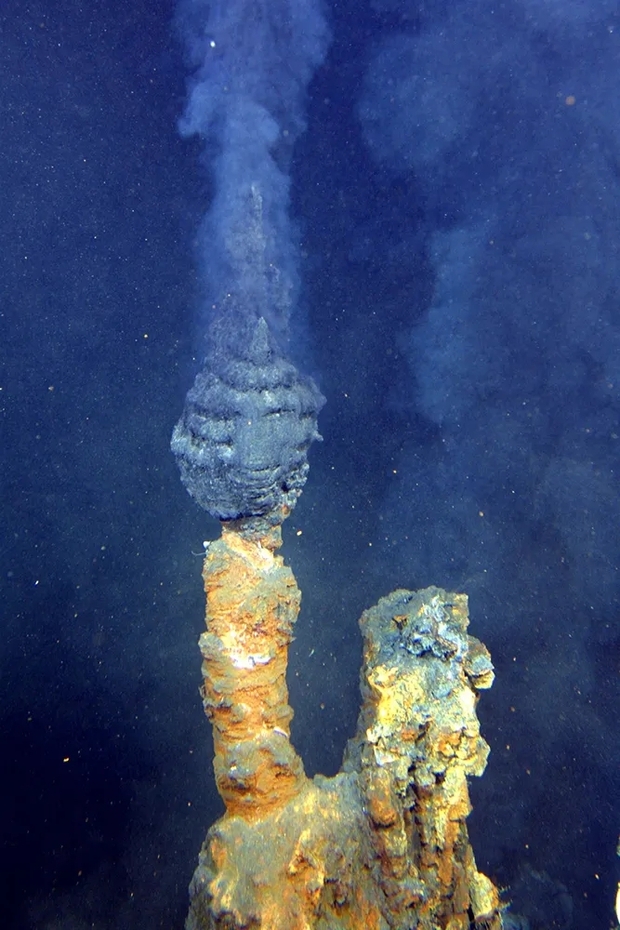
Image: Hot vent on Earth. Credit: NOAA
Are the Enceladan vents similar to Earth’s? The main difference is their temperature. On Earth, the vent water emerges around 400°C, whilst it is calculated that on Enceladus, the temperature is closer to 90°C. This makes little difference as the temperature rapidly declines away from the vent, much as the energy from a star declines with increasing orbital distance.
The ocean on Enceladus is 16-31 km deep, with an overlying ice crust of 20-25 km. However, as the gravity is just 1% of Earth’s, the pressure at the bottom of the ocean is equivalent to just 400-650 m on Earth, compared to Earth’s average ocean depth of 4 km. Therefore, we have a temperature and pressure at the Enceladan vents that are well within the range of Earth’s.
There is one difference from Earth’s ocean. The alkalinity of Earth’s oceans is generally neutral (pH 7) to mildly alkaline, although becoming more acidic due to increasing CO2 emissions. In some vent fields, the pH is as high as 8 [1]. By comparison, Enceladus ocean water is more alkaline with a pH of 11-12. Due to more sodium carbonate (Na2CO3) [2]
Growing terrestrial organisms in simulated Enceladan ocean medium
This year, the same team published a paper asking a different question. Could life be extant in the Enceladan ocean to create the detected organic compounds by Cassini? While we still await any possible future discovery of life, it is worth asking whether terrestrial life could survive and reproduce in the conditions of that ocean. If they can, then this proves that life could exist on Enceladus. If life were to exist in the ocean, it likely would occupy the same sort of hot vent habitat that microbes and complex life are found around Earth’s hot vents.
The first step was to concoct a simulant for the Enceladan ocean, an alkaline salt mixture [sodium chloride (NaCl), sodium carbonate (Na2CO3), and sodium bicarbonate (NaHCO3) with crushed rock that mimicked the likely rocky core at the base of the ocean. To simulate the hot vent, the ocean sample was kept at 65°C. This is a temperature that is too hot for most terrestrial organisms, except for thermophiles adapted to high temperatures. What sort of organisms would be suitable to test? The authors chose an archaeal methanogen that could extract energy from H2 generated by the serpentinization of the rock and the dissolved CO2. The chosen organism, Methanothermococcus okinawensis, was acquired from an ocean hot vent in a Pacific trench near Japan.
The Enceladan ocean simulant [EOS] was made to test 5 pH levels, 9, 9.5, 10, 10.5, and 11, and incubated with the microbes. The controls were an incubation with a standard culture medium for methanogens (MMC) with sodium hydroxide (NaOH) to adjust the pH to the same values as the EOS, and a sterile saline medium.
What did they discover?
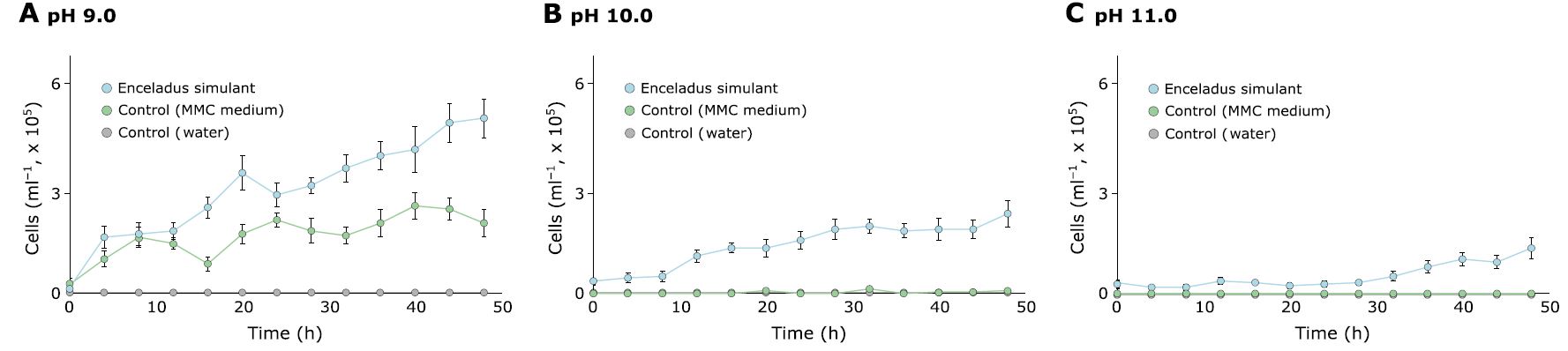
Figure 3 (click to enlarge). Cell growth in the 3 experimental alkaline conditions. Cell growth compared to the standard MMC culture for the organism and the sterile control. At pH greater than 9, only the simulated Enceladan ocean sample inoculum increased growth, while the MMC control showed no growth.
First, despite the low CO2 in the EOS, the microorganism extracted energy from the available H2 and CO2, as shown by the growth curves of the archean organisms over the 2-day experiment. A readout of their gene activity as RNA transcripts indicated that the organism over-expressed the genes in the acetyl-CoA pathway to reduce CO2 for fixation.
The methanogenesis reaction is an anaerobic respiration: CO2 + 4 H2 → CH4 + 2 H2O + energy
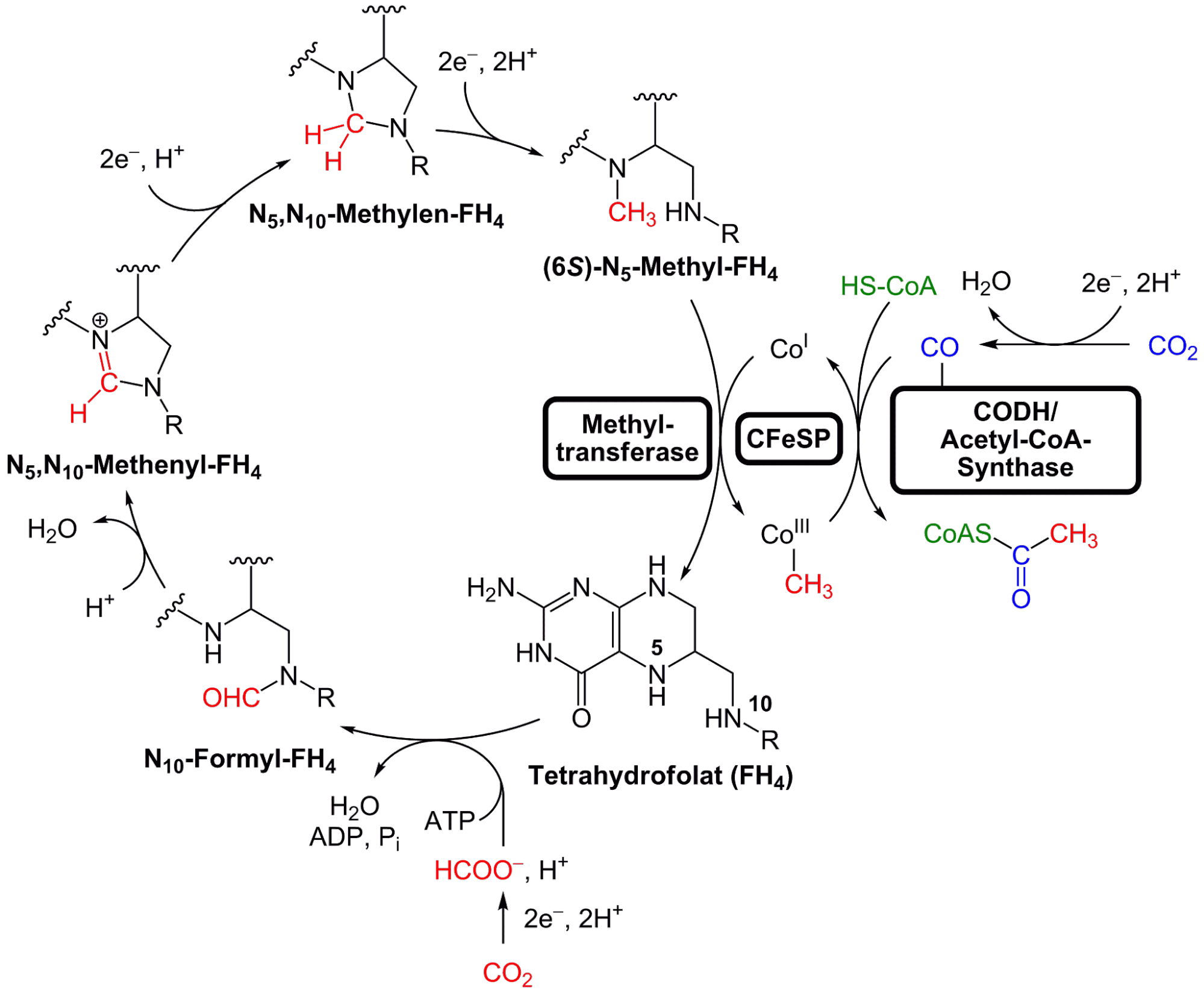
Figure 4 (click to enlarge). Reductive acetyl-CoA pathway in bacteria. CFeSP is a corrinoid iron-sulfur protein. The cyclic pathway consumes H2 and CO2 to fix carbon as acetyl-CoA, which is passed to other metabolic pathways for growth. – source: Wikipedia CC
To confirm that metabolism was occurring, the carbon source (sodium bicarbonate (NaHCO3), the source of CO2) was labelled with carbon-13 as a tracer. This tracer was detected in the released CH4, proving that the organism was responsible for the methanogenesis. [This type of labelled experiment was used to try to detect life with the Viking Mars landers in the 1970s.]
13CO2 + 4 H2 → 13CH4 + 2 H2O (the labeled carbon is transferred to the methane)
Second, the organisms were able to grow despite the alkalinity of the growth medium being beyond the range they were known to tolerate and survive. This adaptation seems to have been achieved by upregulation of the genes in the acetyl-CoA pathway. The experiment clearly demonstrates that a terrestrial organism could live at the hot vents at the bottom of the Enceladan ocean, at least as regards the experimental conditions allowed. While the experiment was not done at the pressure of their natural habitat, and that being greater than at the bottom of the Enceladan ocean, it seems unlikely that pressure was a constraint for such organisms.
The organisms would double their cell numbers about every 6 hours at the baseline conditions at pH 6.5 in MMC. Prior experiments had confirmed that these microbes could not survive in a terrestrial ocean above pH 8.5. At pH 9 in MMC, the growth rate was reduced, doubling in about 40 hours. By pH 10, the cells died. In the EOS condition, at pH 9 the cells doubled in about 23 hours, at pH 10 doubling in about 42 hours, and at pH 11 doubling was slowed to a calculated 126 hours. Although the growth rate was diminished as the pH was increased all the way to 11, the organisms were able to grow at the highest pH, which was well beyond the pH of their natural terrestrial habitat.
What this experiment proved was that a terrestrial organism, not adapted to Enceladus, was able to survive and grow if introduced to Enceladus around a hot vent, near the base of a plume, with an available heat source in the somewhat soda-like conditions of the ocean.
This is very significant, as it supports the earlier Cassini findings that the organic material extracted from the plumes could conceivably have come from organisms as well as an abiotic source. This doesn’t prove Enceladus has life, but that life can exist on Enceladus in the hot, dark conditions around vents at the rock-water interface, and would be worth searching for in a future mission.
It is worth noting that if these terrestrial microbes were introduced to a hot vent on Enceladus, the replication rate would fill that niche quickly due to the power of exponential growth.
Assuming that once that local niche was filled, further growth would be linear, as the new cells would be pushed out into the cold, near-freezing ocean in the plume. The cell density would be substantially reduced, but still detectable in the plume if intact. If the cells were destroyed as they froze, we might be able to detect cell fragments with sufficiently large collection volumes.
What would be exciting would be to detect biomolecules such as fragments of DNA, RNA, proteins, carbohydrates, or lipids in a sample. This could inform us whether any organisms were from a separate genesis, or from an introduction common to terrestrial organisms. Neither DNA, RNA, nor proteins were extracted from the Cassini plume analysis. Had there been, that would have been an unambiguous biosignature. We await a future mission to Enceladus, perhaps even a lander, to investigate further.
The paper about the Cassini plume analysis is: Khawaja, N., Postberg, F., O’Sullivan, T.R. et al. Detection of organic compounds in freshly ejected ice grains from Enceladus’s ocean. Nat Astron 9, 1662–1671 (2025). https://doi.org/10.1038/s41550-025-02655-y
The Experiment growing the methanogens in simulated Enceladan ocean water is: Helmbrecht, V., Postberg, F., Khawaja, N., Reichelt, R., Klein, F., Grohmann, D., & Orsi, W. D. (2026b). Enceladus-like geochemistry fuels methanogenesis under extreme CO 2 limitation. Science Advances, 12(39), eaei0167. https://doi.org/10.1126/sciadv.aei0167
References
1. Ocean vent. (n.d.). https://education.nationalgeographic.org/resource/ocean-vent/
2. Glein, C. R., Baross, J. A., & Waite, J. H. (2015). The pH of Enceladus’ ocean. Geochimica Et Cosmochimica Acta, 162, 202–219. https://doi.org/10.1016/j.gca.2015.04.017

So these biosignature chemicals including methane could be detected in a mass spectrometer and spectrometer. A mass spectrometer uses the mass of the molecules and atoms, the further they travel through it, the more massive they are, the heavier elements. Future NASA mission will test for this.
@Geoffrey
Much of the detection of molecules is done with mass spectrometry. The CDA in Figure 1 uses a mass spectrometer. Because it is sequentially driving off compounds (with heat?), the usual way to display this is a 3-axis chart: x = mass (m/z), z = time, y = amount. In the 2D chart, they have collapsed the m/z axis and annotated key peaks over time with mass. This is then compared to the reference spectrogram.
Desktop mass specs are common in labs, but it is the miniaturized versions that can be put on robotic space probes. Often, mass spectrometers are paired with other analyzers, e.g., Raman spectrometers that are sensitive to different types of organic bonds, so that compounds with the same masses can be distinguished structurally.
You may recall my post about an experiment using mass spectrometry to determine whether a mix of organic compounds was biotic or abiotic.
Alien Life or Chemistry? A New Approach
You can find data on the different types of analyzers on probes and landers. As the size of the vehicles increases, more analyzers can be put on the vehicle to do the experiments.
If we do detect nucleic acid bases, I have no doubt that probes will include instruments to try to sequence DNA or RNA fragments directly, or short DNA/RNA oligomers using microarrays. If we suspect life is present, then a microscope would be nice, if cells could be extracted and viewed. A microscope would work regardless of the biology when looking at cells, especially motile ones. For life as we don’t know it, we might be detecting life with older definitions, such as having “irritability” – like pornography, we will “know it when we see it.”
Thank you, Alex Tolley for telling me about a Raman spectrometer. In am interested in spectroscopy. I didn’t know that there were spectrometers which use Raman scattering which use a laser fired at atoms and molecules where the incoming laser photon being scattered has different energy than the one coming back out as the result of the different energy levels in each atom. The energy lost by the photon is called Raman scattering gives us the chemical element based on their unique energy levels. Energy is gained or lost in Stokes Raman scattering.
Also how a mass spectrometer works is interesting. Atoms and Molecules are ionized and become charged. These then can be accelerated by an electric field or curved in a magnetic field. The lighter ones are curved less. “The heavier ion is harder to bend and follows a wider curve.” The heavier ion has more momentum. The heavier ones travel more slowly with the same acceleration energy. So my idea that the heavier ions go further is not correct. Copilot AI
And of course it is the wavelength of the energy lost that tells us what atom or molecule it is. Wavelength gives the frequency and wavenumber CM-1 which can be used to determine energy.
“Neither DNA, RNA, nor proteins were extracted from the Cassini plume analysis. Had there been, that would have been an unambiguous biosignature. We await a future mission to Enceladus, perhaps even a lander, to investigate further.”
How difficult is it to capture a plume sample from an orbiting satellite? Is the plume at that altitude too rarified to allow a sufficient amount of material to be collected, or is the plume too much for the satellite to survive passage?
Presumably a sample collection orbit will necessitate multiple low passes due to the propulsion constraints. Repeated low passes would likely multiply the survival risk. I’m curious.
The Cassini paper has data on the impact speeds of the particles in the the CDA’s collector.
@Ron
Some numbers.
The Cassini probe sampled the plumes about 100 km from the surface of Enceladus. The impact velocity for the samples was the higher value of about 18 km/s, while lower-velocity impacts of less than 12 km/s were for the particles in the E-ring.
I estimate the orbital velocity of Enceladus around Saturn is about 12.6 km/s, based on the Wikipedia data for the semi-major axis and orbital period. This seems about the right order for the flyby velocities. Therefore, the plume intercept velocity is ~5.4 km/s
As the plume material populates the E-ring, this means that the plume velocity at the surface of Enceladus must be about as great as the escape velocity of around 0.24 km/s.
Clearly, the impact velocity of the probe is likely to be far higher than the plume material velocity, whatever the height of interception for collection. I suspect that it is the plume density that will be important, but I have no data on that to even estimate the possible forces incurred by entering a plume much closer to its base on the surface.
Thank you. My reason for asking is that for a future mission with better instruments, or at least tuned to detect biological matter, whether enough material can be captured and whether the “crash” into the collector would be insufficient or degrade the samples, respectively. The relative velocity and plume density (and especially any accompanying “dust” that could damage the craft and instruments) would determine the probability of mission success. Maybe I’m asking for detail that does not yet exist.
Cassini obviously was able to collect plume samples. The higher the orbit or plume fly-through, the scarcer the particles, and likely more dust. Ideally, a collection lower in the plume would be better. Too low, and it might be like flying into a jet from a hose. The velocity of the jet might not be important, just the density of the jet. It might be like hitting a wall or ice. I don’t have any data on this. If you find any, let us know.
As for what was found, I am surprised there was no definitive finding of amino acids (the box at the top of Figure 2). Given their ubiquity in space, does that tell us anything, either way?
Now, if only we could detect a frozen “fish” in orbit, as suggested by Freeman Dyson! Even just a mangled piece of fish – a jaw, a fin, some scales, a few vertebrae?
Ceres in my opinion is a better choice. Easier to get to as well compared to the Saturn system.
This has to be tempered by the age of the moons interior to Titan – they were either formed or heavily disrupted within the last billion years or less. Enceladus may be a great place to study a pre-biotic environment, though.
Enceladus also has a low gravity and atoms and molecules from the plume go much higher than on our Moon or Earth which is better for easier retrieval.
Enceladus also has a low gravity and atoms and molecules from the plume go much higher than on our Moon or Earth which is better for easier retrieval.
Yes and no. @Ron noted that there is a tradeoff between going closer to the base of the plume and collecting more plume sample but with the possible added risk of damaging the space probe.
For a flyby or orbiting probe, the height of capture is almost irrelevant from an energy-use POV as the craft is already at that altitude. As the plume disperses, the fixed size of the collector will collect fewer particles on each pass. The paper on “Detecting…” explains how it was necessary to determine which particles came from the plume and which from elsewhere, to try to separate the plume particles from other non-plume particles. The 100 km sampling of the plume was the important one for the plume sample, and was determined by determining the collector impact with the particle of around 18 km/s.
A lander might be a good way to sample both the fresh plume as it emerges from the surface, as well as accumulated material on the icy surface around the plume. Unlike Europa, the surface is not heavily irradiated, except by the same cosmic ray flux that passes through the solar system. This makes a lander on Enceladus a better choice than Europa. It also might mean that even a shallow bore into the ice next to the plume vent may detect both biomolecules and cells trapped in the ice but protected from damaging radiation. Europa’s surface snow/ice is sufficiently irradiated that it contains hydrogen peroxide [H2O2] that is effective at destroying organic material. This is not such a problem on Enceladus, as so far there is no indication that H2O2 detection on Enceladus is as distinct as on Europa.
While we know that bacteria trapped in ice in Siberia have been revived, whether this is possible from the much colder ice on Enceladus is unknown. However, given that freezing cells for storage in liquid nitrogen is fine for mammalian cells, e.g., egg and sperm cells, I would think this might be a fine storage medium.
Even though the travel time to Enceladus is longer than to Europa, the lower radiation of that moon’s surface, the lower surface gravity, and the lower escape velocity might make Enceladus a better bet for finding biomolecules and even life using a lander, and possibly returning a sample to Earth for further investigation.
If living cells were recovered and successfully cultured on Earth under strict quarantine at biohazard facilities, can you imagine the excitement of astrobiologists as these microorganisms were analyzed with the battery of tests and experiments that are possible here?
Most importantly are the tiger stripe cracks that can ease a cryobot’s descent.
Hi Alex
Thanks for the interesting article, I sure would like to see a lander here and at Europa too.
It also made me realize its been a while since Ive studied chemistry too!
Thanks Edwin
Reviewing the discussion of biochemistry detections from Enceladus, it does lead to speculation about how to obtain a good ring side seat for observing the show.
Flybys, of course, among the moons of the large Outer Planets involve long waits between intensely orchestrated, quick passages. But short of landing there might be a couple other alternatives for future sampling. Enceladus is literally embedded in Saturn’s Outer rings, rings in the sense that they are reflective, but not likely to be very dense. At 500 km diameter Enceladus has a regular spherical form vs. that of many asteroids. But where I am heading with this is the possibility that an observing space craft could stand off at one of the restricted 3 -body problem libration points. In particular, the one’s radially aligned with Saturn and Enceladus ( between and beyond the moon). The “triangular” ones would not be of much help for this problem, but these two perhaps.
Not having done the calculations as yet, my fingers are crossed that these stability points are not inside the radius of the moon. It’s not as disruptive environment as Jupiter with its Galilean quartet, but Titan, for example, might be enough of a disturbance to make this just a passing thought.
But an actual landing on Enceladus has its difficulties too. Observing a vent from the surface would be like waiting for a Mount St. Helens-like event to wipe the station out, assuming there was any success in getting close enough to matter. But if a spacecraft could hang on either at the inner or outside Lagrangian stability point along the Saturn – Enceladus line…
@wdk
How stable are these Lagrangian points in the Saturnian system? I have read that the moons Dione and Tethys influence Enceladus’s orbit, which suggests that these moons must have an effect on the Lagrange points, especially L2, but perhaps not as much on L4 and L5. (Yes, L4 and L5 might well be too far away to be of use in your suggested approach.)
While the plume material, as a sample of the subsurface ocean, would be the best representative sample, I would speculate that this may not be entirely necessary. Plume material may be trapped in pockets below the surface. Those pockets might be close to teh surface. Yes, the liquid will probably have frozen, but it also may not have been subjected to a vacuum, preserving biomolecules and even cell organelles and whole cells in ice. Acquiring such a sample implies that waiting for a plume to erupt may not be necessary. As plume water also falls around teh base of the plume, relatively fresh plume snow might be worth scraping up with a scoop like that on several Mars landers, like Phoenix. I would have thought that a polar orbiter would be a better solution. It would allow a lot more science to be done, from mapping and remotely analyzing the surface and subsurface in greater detail, as well as being never more than one orbital period from an eruption. If I may be so bold, perhaps several collectors could be deployed along that orbit to reduce any time delay between an eruption and a sample collection.
We don’t have to only consider these flagship probes either. Suppose we build simpler, dedicated samplers and analyzers. We could send a swarm separated in time between units towards Enceladus with the assumption that at least one will intercept an active plume. Perhaps too soon to consider, would be fast, laser-propelled flybys, that would do some science and plume collection before heading on towards other targets before reaching beyond the heliosphere and mapping interstellar space. The proposed sundiver mission that would reassemble a spacecraft after the Oberth maneuver with light sails would get to Saturn much faster than the Cassini Earth-Venus gravity assists to potentially achieve either a flyby in pieces, or even an orbiter if it can be made to decelerate. One-science-objective craft can be made very cheaply and deployed cheaply to serve the science objective as long as the probability of success is reasonably high. Otherwise, the multi-objective craft that could become an orbiter using Saturn’s gravity or atmosphere to decelerate (like the Leonov in 2010: Odyssey 2) would be my preferred choice. Could penetrators deployed from orbit be used to extract and analyze a subsurface sample, avoiding the need for a lander entirely? Or penetrators deployed from a lander at a safe distance from the vent, and reeled back to the lander for analysis? IDK if any of these approaches have been looked at, but I have no doubt that some out-of-the-box thinking might get a subsurface ocean sample without needing to land next to a plume and wait, or drilling down through kilometers of ice to reach the ocean. (Although a submersible capable of reaching an ocean vent might be a good way to get a vent sample that may be rich in microbial life.)
As we now know that at least terrestrial archaea can reproduce in a simulated Enceladan ocean, it seems to me that if we could repeat the labelled experiment, it could be done with a sample collected by a submersible (or similar) to detect metabolic activity. Could the same experiment be done with a shallow subsurface sample that might still contain viable cells?
I am assuming that prokaryotes are the likely life form if any exist on Enceladus. However, on Earth viruses are far more common than bacteria. It is why bacteria evolved a primitive “immune system” to defend against them. Could we look for matrials specific to viruses – DNA/RNA and proteins? In both cases, nucleic acids and amino acids should exist, albeit possibly of different ones than on Earth. If they use a very different biology, then the search for known microbial biosignatures may be futile. We should be looking for what we would call life from a shadow biosphere on Earth. How would we do that? Motile cells viewed under a microscope might be the best way to detect life in this case.
A.T.,
Admittedly the Lagrange Point suggestion is a trial balloon. And I appreciate your examination of the benefits or drawbacks.
Of course, Enceladus as a moon orbiting Saturn seems like a small object, it is not that much different in terms of the mass ratio of the Earth orbiting the sun. What might be different would be the diffuse, charged particle flow in the vicinity. We have watched spacecraft zoom in and out of the intense E-M belts around the giant planets, but in this case a spacecraft would really be embedded in it. But it would be the same case in close orbit of Enceladus or resting on its surface. And there are a number of additional considerations should that be the case for a sampler:
-Proximity to a geyser risks quakes with rains of solid debris, flooding, periods of dark?
– Terminal maneuvers and landing procedures to get to the Enceladus south pole.
E.g., direct targeting or intermediate steps in the Saturnian system?
– Communication with a polar lander approaching or on the surface of a moon occulted by Saturn and its ring much of the time. And EM and charged particle environment not quite as bad as Jupiter’s – which is nature not conceding much.
Standoff from Enceladus, either inward or outward ( or perhaps both) would provide more localized continuity of mid latitude regions. Assuming Enceladus rotation is orbit synchronous, occupation of both stations might be worth consideration.
So given all the above, proceeded to calculate just where L1 and L2 might be located.
Among solar system satellites, Enceladus is two orders of magnitude larger Phobos or Deimos ( ~500 km) and closer to Saturn than the moon is to Earth ( 238,037 km and not statute miles). The Lagrangian point distances 1 and 2 from the center of Enceladus are is determined by the cube root of the mass ratio cube root of Enceladus mass over that of the Enceladus- Saturn system.
My result is about 1358 kilometers radial distance from the center of Enceladus, facing toward Saturn or away for the two stations.
Since Saturn has many other satellites, they could be a perturbing consideration, but it would likely be Titan for the most part. Enceladus and the rings are in the equatorial plane of Saturn which is titled to the solar ecliptic, 26 degrees to its pole.
A likely source for gravitational perturbation to this static picture would be Titan orbiting Saturn at 1.2 million kilometers radius with a mass 1 thousand times greater than that of Enceladus.
Admittedly, this idea began just as a conjecture to examine. But if investigation of
Enceladus exobiology involves more spacecraft monitors, perhaps this approach should not be dismissed or thrown out.
Whether there is microbial life on Enceladus, Mars, and other extraterrestrial locales or not, can we expect that it will almost always only be present as prokaryotes and not eukaryotes, and therefore no complex, multicellular life?
Years ago, when I wrote my first post, I used the fact that on Earth, the Cambrian explosion of phyla with their diverse body plans occurred within about the last 1/8th of the time that life has been extant on Earth. While this fraction will increase going forward, it will likely end once Earth becomes unihabitable by most complex life withing a 1-2 by. After that, it may revert to being inhabited by prokaryotes living in protected refuges, like the lithosphere. The logic, if that holds, is that most planets (and moons) will either be in the state before complex life emerges, or after it has disappeared again.
More recently, there seems to be an emerging consensus that the emergence of eukaryotes with incorporated aerobic bacteria that evolved into mitochondria and vastly improved the energy efficiency of life, was a unique, and unrepeated event. While the evidence may be rather like life rooted in the last universal common ancestor LUCA, which does not preclude other earlier forms that went extinct, if it was unique, then it would indicate that this very rare event is the “Great Filter” and again, supports the idea that life in the universe in almost entirely procaryotes. All our exploration will show worlds that may look sterile, or have oxygenated atmospheres, but no evidence of forests of large animals. Life would only be evident by looking for it with a microscope, or perhaps bacterial mats, as we see with stromatolites. If the atmosphere is oxygenated and also has evidence of methane and even other trace biosignature gases, then we can infer life is present, even if there is none observable remotely by telescopes and flyby or orbiting probes. Even landers might have difficulty in detecting life unless it can culture these microbes and do labeled metabolic gas experiments to infer life is metabolically active. This failed on Mars with the 1970s Viking landers, and most bacteria cannot be cultured successfully in the lab.
Lastly, complex life with the large phenotypes we have on Earth requires some stability of the climate. Models suggest (see e.g., CD post Are Planets with Continuous Surface Habitability Rare?) that we have been fairly lucky despite indigenous and cosmic “catastrophes” that could have been much worse, creating a permanent frozen or hot state that forced almost all life to disappear, except microbes in niches and refuges that protect them while all other life becomes extinct. Even if conditions become more clement, the rarity of the event that creates eukaryotes might leave the planet devoid of any eukaryote and potential complex life, again leaving just a prokaryote-only inhabited planet.
Given the distance to the stars, it will take millennia to get probes to planets and build a catalog of the biology of these microbes to understand the possible variety of molecules used and how they functionally work together.
Given the rarity of eukaryotic life, especially complex life, should humanity terraform planets with terrestrial life (“greening the galaxy”), or jump-start the local process artificially by engineering the process with indigenous life and let evolution take its course? The former might take millennia to create a living, terraformed world; the latter would likely take a billion years to do the same, but with a very different biota. The results of the latter might only be experienced by observers traveling at close to c or living in a very deep gravity well, like the surface of a Black Hole.
Take a look at recent thoughts on the origin of plants, i.e. chloroplasts.
@Martin
Chloroplasts are organelles that were acquired from either endosymbionts or an organism that was ingested, like the one that left what is now a mitochondrion.
This may have been a singular event, although a different chloroplast has been found in a protist amoeba.
This would imply that this engulfing mechanism is not a vanishingly rare event, but has happened at least 2 other times, but with photosynthetic bacteria.
However, biology is not simple. A number of organisms acquire photosynthetic symbionts. Do these become the source of the chloroplast plastids? Endosymbionts that live inside the cell may be another version of this, suggesting that the incorporation of cellular genomes that become plastids is not uncommon. Then there is the controversial idea (originated by Margulis) that animals with multiple life stages, e.g., insects, are the result of a fusion of different organisms due to the mixing of sperm and eggs in marine organisms. All of these events are distinctly non-Darwinian, much like horizontal gene transfer in bacteria.
TLDR; the idea that the incorporation of DNA from ingested/endosymbionts is a unique phenomenon may be wrong. Clearly, that all mitochondria appear to have a single ancestor suggests that this was either a singular event, or just the “fittest” one of more events. Chloroplasts seem to have a singular event too, except for an organism that has a different chloroplast origin.
The interpretation of singularity is due to how we construct similarity trees. They always end up with a single origin. For example, all humans have a single “ancestral Eve”. However, no one believes there was a single hominid female at the time (even if the Bible imagines such a person). It just means that the ancestral trees eliminate other lineages as the tree is constructed. This is likely to be the case with LUCA, and possibly with mitochondria where only one event was successful.
If this means that its current singularity was a “Great Filter” that implies that life elsewhere is mostly prokaryotic, then I agree that this may be the case. The only way to determine this is by finding other life.
If we find life elsewhere in the Solar System, and that life has complex forms and is not related to terrestrial life in some way, then the uniqueness of the appearance of an ancestral incorporation of a bacterium within another is falsified. Observational data is key. (Just as black swans in Australia falsified the Eurasian belief that “all swans are white.”)
I reject the great filter idea because it was it was conceived without a thorough understanding of biological evolution and genetics. Necessity always governs biology. The idea that Quote by Alex Tolley: “More recently, there seems to be an emerging consensus that the emergence of eukaryotes with incorporated aerobic bacteria that evolved into mitochondria and vastly improved the energy efficiency of life, was a unique, and unrepeated event.” This is anything but unique as necessity always builds on previous stages and uses what is available. It may be that life is unique in our solar system, but our solar system is not unique. Rare maybe, but where there is one there is another. There might be many Earth’s without Moon’s in the life belt of a G class star, but without a Moon and therefore there will be no magnetic field to deflect the solar wind and atmospheric loss over deep time. Consequently, there could be water loss and there might be a lot of these types of planets which would be in arrested development possibly with no Eukaryotes , but only prokaryotes. For intelligent life that is a different story. We need at exact duplicate, an Earth Moon system in the Goldilocks zone around a G class star.
We assume that most of the G class stars are older and then we would be the new kids on the block. The problem is that there might be more younger G class stars than we think with exact Earth moon systems in earlier stages of development that ours. There might even be a planet in the dinosaur age right now and one in the early age of man a million years.
I don’t think nature is dependent on us to give birth to life assuming that life is a priori and our universe anthropic.
I am not sure you understand the context of which “unique” applies. There are no eukaryotes that have different mitochondrial lineages on Earth. One explanation is that this was a one-time event that was never repeated. But as I alluded to, this could simply be survivorship bias. There may have been other attempts, but those other organisms were outcompeted and became extinct.
Phylogenetics places the last eukaryotic common ancestor (LECA) about 2.3 Gya, so about 1.5-1.9 Gy after abiogenesis of the current lineage of all terrestrial life. So we are talking about prokaryotes being the only form of life on Earth for nearly half the time there has been life on Earth. It took a long time for the LECA to appear, which suggests that it was a “hard step”, harder apparently than abiogenesis.
Does this mean it is a genuinely hard step, or just that it took a long time on Earth? We don’t know. If life in the universe is based on a biology similar to Earth’s, did the equivalent of eukaryogenesis occur in most cases, and at random times in its evolution, so that complex life is common? Again, without data, we don’t know. I agree it is potentially dangerous to make assumptions based on one datum. You are doing the same by suggesting other mechanisms are involved that would block the development of life, especially complex life.
Douglas Adams satirized the anthropic principle this way:
The [il]logic fits equally well for theories about the evolution of life and eukaryogenesis on Earth.
This is why discovering life on another world would be so extraordinarily interesting. If it was from a separate abiogenesis, it would answer so many questions and shed light on assumptions we have made about terrestrial biology. Even prokaryotes (or indeed what we would call that domain), would provide answers about basic biology. Eukaryotes would add answers to how sex (if any) was achieved, or how. and when complex life appeared,
As you state, that is an assumption. Even if life is ubiquitous, complex life may not be. That is the argument of Ward and Brownlee in “Rare Earth: Why Complex Life is Uncommon in the Universe.” Of course, their argument is much like the many possible obstacles of planets not being like Earth, which is the butt of Adams’ satire. This doesn’t mean that it correctly predicts (or fails to predict) the probability of complex life appearing. Drake et al couldn’t have known about the details of biology back when he proposed his famous equation. If eukaryogenesis is the “Great Filter”, should it be added as a term between f_sub_l and f_sub_i or just included by reducing the p(f_sub_i)? I graduated in biology in 1975, and we had only discovered the possible importance of DNA 2 decades previously. Genes were abstract ideas, and math was used to determine gene loci. Textbooks had to be rewritten and new academic courses developed to teach what was being discovered. (It was also seriously argued that memory was stored as RNA in the brain. Laughable now, but then…)
We can speculate all we like, and have fun explaining the Fermi Paradox, but it is just argumentation with almost no data to support any logic other than our sample-of-one. I hope we can extend that sample size with local data and a decent probability of biosignatures on exoplanets.
The intuition succeeds where logic fails. The whole picture is necessary here, the end state with the beginning. In other words we have to go from less complexity to greater, but the complexity to build all types of life was there from the start. This is very teleological and philosophical. The finished product is what we see today. The right environment will produce that same thing every time. The same thing happened with the molecular biology of life which is chemistry. We have a final maximum complexity DNA. RNA came first, then DNA and along with it more adaptability. One has to look into the complexity of the DNA to see that what is possible from such a complex system. The whole system is part of nature too, but not just the parts. The intuition sees how things are connected to the whole and this is very abstract thinking which does not differentiate. Therefore the psychology is that such a broad worldview always which is impersonal seems to remove uniqueness and is antithetical to the subjective. Recall the philosophy of physics is that it’s first principles can be considered objective, mind independent, and unchanging, the four forces of nature and chemistry which is based on electricity and the electromagnetic force. There are the same everywhere in our universe. Another assumption is that we assume life must be different everywhere else because we don’t have any examples anywhere else but here. Alien must be novel and other.
Similarity and dendrogram trees.
This explains why a tree built on similarity results in a single root.
The data is a 2D matrix of pairwise similarity scores between items. The score can be built in many ways, from physical traits to DNA similarities. Any reading that can be compared ot any other and scored can be used.
The tree is built starting with the leaves. The most similar pair are compared, and the node wth that score connects the 2 items. The score can be calibrated to time if the traits can be matched to a fossil that matches the node in key attributes. The node now replaces the 2 leaves in the matrix. This operation is repeated until the last node is created.
In the case of genes and known molecular clock rates, as well as calibration with fossils where available, the timeline back to LUCA can be constructed. I posted an article about a recent paper on this: Our Earliest Ancestor Appeared Soon After Earth Formed.
Suppose that there was no common ancestor, and that there were 2 entirely different lineages. The common node, assuming there was no minimum similarity cutoff, would represent a time older than the Earth. This would be impossible if the assumption that a terrestrial abiogenesis was common to all the lineages. The same would apply if there were other great dissimilarities, e.g., the nucleic acid bases where different, the genetic code was different, the amino acids in the proteins were different. The phylogenetic trees try to uuse ancient genes whose sequences were highly conserved. A ribosomal subunit is often used for this. If some organisms today did not have that particular gene because their biology was different, there would be no similarity scores between this lineage and the other. This would result in 2 disconnected trees.
What about “Ancestral Eve?” Evolution does not work at the individual level, but rather at the population. Eve would have one or several gene alleles used in the ancestral tree construction that represent the population at that time. If the allele[s] improve the successful reproduction of that allele, it would slowly spread through that population until that allele dominates, and teh population would have evolved. Clearly, if all the lineages contained genes that linked back to that allele, we could not tell when that allele emerged. However, if the population diverged from the baseline population in some way, so that 2 populations resulted, then we can find the approximate time that the allele emerged. As we have lineages that diverged but remain extant today, the ape lineages, we can estimate when the population with ancestral Eve appeared. When we use other means to derive ancestral trees, such as records, they will show when certain family names die out (no male children to bear the family name), and inevitably would root with an individual. They may be a monarch, as their family lineages have carefully documented records.
Returning to our LECA, was it a unique individual event, of one individual successfully becoming an endosymbiont and then evolving into a mitochondrion, or a population of the same species that did the same on a species of bacteria? Suppose that the prey bacterial species was the one that was changed or protected by a transient viral infection that was soon counteracted? Then there might be nothing special about the single species having genes that contributed to the mitochondria. Whether or not this speculation is true, the fact that once the bacterium was on the path to becoming a mitochondrion, it must have evolved as a lineage that had different genes removed from it across the new successful eukaryotic domain. While out of my area of expertise, I would expect that the mitochondria in each eukaryote to evolve on its own path, discarding different genes and having some of those incorporated into the bacterial genome, while simultaneously evolving a discrete nucleus and other organelles. Wouldn’t we expect that each bacterium would evolve into different eukaryotes? Or did one or a small population of the most successful bacteria outcompete all the others, leaving a LECA lineage derived from a small, very similar population? I have yet to read a convincing story of how this happened. The only possibility is that all the bacteria competed, but only the most successful one became the crown organism that gave rise to all the eukaryotes. All I know is that the mitochondria display the same similarity to a single extant bacterial species suggesting it is the commom source of the mitochonfria in all eukaryotes.
I agree completely with your reasoning Alex Tolley. It is competition between bacteria and resources. There is generic innovation. The adaptation to a new environment. The great oxidation event. One a cell could use oxygen which is toxic to other organisms. Also the relationship is symbiotic between the cell and mitochondria. This is the huge innovation that made fish and eventually land animals possible. This is not just any branch of the tree of evolution, but a link between primitive and advanced which is a big innovation since cells had their own power plants, the Mitochondria. Prokaryotes did not have Mitochondria, but Eukaryotes started with it. Copilot AI.
@Geoffrey
Copilot might need to be retrained. ;-)
The main difference between prokaryotes and eukaryotes is the source of their energy. Prokaryotes, even photosynthesizers, used inefficient anaerobic metabolism to drive their metabolism. Mitochondria were derived from bacteria that used aerobic metabolism that generated much more energy. (IDK why these aerobic bacteria didn’t take over.) With this more energetic energy extraction, plus the compartmentalization of the cell, eukaryotes could grow larger cells and eventually create complex cellular structures where the development of each cell was subsumed by various control systems. Bacteria could create films of the same cells but not differentiated structures. The aerobic bacteria slowly lost most of their genes, some to the host’s genome, leaving just the main genes to drive aerobic respiration most efficiently, and the ability to replicate when the host cell replicated.
It really is a very elegant symbiosis that became obligate over time. If ever there was a stage in evolution that might have required some engineered tinkering, this would be one of the prime examples. The stages of a host bacterium creating compartments and organelles amaze me. I have never explored it, just take the eukaryotic cell as a “given”. (“Now learn to distinguish the organelles under the microscope.”)
Nick Lane’s very accessible popsci books on various aspects of the molecular biology of life show how remarkable this can be. The means to extract energy from oxygen that must be kept under exquisite control is breathtaking. One wonders how long it must have taken to evolve the proteins involved. c.f. The Vital Question.
We only see the end result, not the earlier stages that led up to it. Rather like only seeing a modern internal combustion engine and not the early attempts to create one. Compare Whittle’s jet engine to a modern turbofan.
I said that eukaryogenesis must have been a hard transition due to its complexity. Just to check that I hadn’t missed some explanation I wasn’t aware of, I prompted Google’s Gemini AI for an explanation of how organelles formed as prokaryotes evolved into eukaryotes with radically different cell architectures. This is the answer it provided:
———————————————————
The transition from prokaryotes to eukaryotes is one of the most significant evolutionary leaps in the history of life on Earth.
The primary scientific framework explaining how this happened is the Endosymbiotic Theory, famously championed by biologist Lynn Margulis.
Instead of evolving organelles from scratch, eukaryotic cells were formed through a process of symbiosis, where one prokaryotic organism engulfed another, and the two formed a permanent, mutually beneficial partnership.
Key Stages of Eukaryogenesis
The evolution of eukaryotes from prokaryotic ancestors unfolded through several major milestones:
* 1. The Host Cell (An Asgard Archaeon):
Recent genetic discoveries show that the host cell was likely an ancient archaeon belonging to the Asgard archaea superphylum. Unlike typical bacteria, these archaea possessed complex internal protein networks and genetic machinery that made them better suited for a cooperative lifestyle.
* 2. The Origin of Mitochondria (Alpha-Proteobacteria):
Around 1.5 to 2 billion years ago, this archaeal host engulfed an aerobic (oxygen-using) bacterium, likely an ancestor of modern alpha-proteobacteria. Instead of digesting the bacterium, the host cell kept it alive. The bacterium used oxygen to efficiently generate ATP (energy) for the host, while the host provided protection and nutrients. Over millions of years, they co-evolved, and much of the bacterial DNA was transferred to the host’s nucleus, turning the bacterium into the mitochondrion.
* 3. The Origin of Chloroplasts (Cyanobacteria):
A later endosymbiotic event occurred when an early eukaryotic cell (already containing mitochondria) engulfed a photosynthetic cyanobacterium. This partnership gave rise to the lineage of plants and algae, with the cyanobacterium evolving into the chloroplast.
Evidence Supporting Endosymbiosis
Science has confirmed this evolutionary pathway through overwhelming genetic, structural, and biochemical evidence:
* Double Membranes:
Mitochondria and chloroplasts are surrounded by two or more membranes. The inner membrane resembles a bacterial plasma membrane, while the outer membrane resembles the host cell’s vacuole or engulfing membrane.
* Circular DNA:
Both organelles contain their own independent, circular DNA molecules, structurally similar to bacterial chromosomes rather than linear eukaryotic chromosomes.
* Independent Ribosomes:
Organelles contain their own ribosomes that are structurally closer in size and function to bacterial ribosomes (70S) than to the surrounding eukaryotic cytoplasm ribosomes (80S).
* Autonomous Replication:
Mitochondria and chloroplasts multiply within the cell through a process akin to bacterial binary fission, completely independent of the cell cycle.
Would you like to dive deeper into the genetic discoveries regarding the Asgard archaea that reshaped our understanding of this theory?
——————————————————————-
Note that this is a hand-wavium explanation, an almost Kiplingesque “Just so” story. I have so many questions about this evolution, but there is no explanation of how the changes were made, just that this is the result based on the available evidence. I find it very unsatisfactory, as there should be some more detailed explanation of the mechanism. Perhaps this is impossible to determine given there are no “fossil” intermediate examples to inspect. Maybe we will have a better explanation in the future.
Alex Tolley nothing you’ve written here contradicts my last post. In fact it supports it. We both agree that life is a complex genetic system which requires a unique, complex environment. This uniqueness is only superficial though which comes back to my original point that the first principles of physics including biochemistry and molecular biology are impersonal, ubiquitous and not unique. This does not limit our freedom, but increases it because we are part of a larger, independent cosmic system we can’t be outside of. Quote by Alex Tolley: “four base pairs are optimal.” My point here being in light of this, I don’t think life was an accident, but part of the whole system which is like the Gaia hypothesis and anthropic principles.
I guess it is an old drum that I’m still beating, as I’ve mentioned this a couple of times before, but if we do not find some sort of life on Mars, I think we are likely completely alone. I say likely as with the distances and deep time involved, you can never completely close the door but if there is no life on Mars, distances and time become an anchor that insure we (humans) will not get to see any other type of life.
With regards to biosignatures, it’s a bit like the saying, “close but no cigar”. We may convince ourselves that there is a possibility of life but will we ever be able to make a definitive statement? Maybe. Maybe not.
Outside of this there is always the “knight in silver armour” scenario – arrival of a ship or tech. This may be the only shot outside of a definitive discovery within the Sol system that will get at the question of how common is life in the cosmos.
“What about extant life?”
This is the key point of discussion for me. Mars is the only place where we are likely to get boots on the ground and send enough time on to really ask the questions about this subject. If after 10 years we see nothing or only fossils then we have our answer – humans are likely to be quite alone.
The premise being:
1. Mars was quite similar to Earth in that there was water and an atmosphere for a sustained period of time
2. On Earth, life appeared quite rapidly and so the assumption is that it likely did so on Mars as well
3. If life never took hold there then it would likely mean we are alone and may never find other life
4. If it appeared and is only in the form of ambiguous fossils, then our chance of finding life elsewhere will be much slimmer but not hopeless
5. If it appeared and is now sparse – this would be a huge boost to increasing our chances of finding life elsewhere in Sol and beyond – life is hardy and finds a way
Throwaway missions to distant moons feels like a bit of a Hail Mary (great movie by the way) and expensive for a potentially ambiguous answer.
With Mars, while it was once habitable, it is no longer so. Therefore if there was life, but it has now gone that is likely because of the change in habitability.
On Earth, had a another Mars-sized body impacted the Earth within the last 4 bn years, there would be no life on Earth. While admitedly there would be no humans to think about life in the universe, it wouldn’t mean that there is no life elsewhere.
On Mars, even a loss of surface habitability doesn’t a priori mean that life has become extinct. Prokaryotes may well have survived in the Martian lithosphere, just as they will when the Earth’s surface heat extinguishes all surface life, leaving only the prokaryotes living in the lithosphere, protected from the heat.
That is why Mars still represents the best chance of finding life. But it will require deep drilling or serendipitous finds, perhaps ejecta from a large crater. Prior discovery of fossil stromatolites would be proof that Mars had life in the past, and therefore there would be a better chance of finding extant life in the crust.
I wouldn’t say that searching for life on an icy moon is a “Hail Mary” attempt. It is feasible to search there, especially if there is a possibility of a different abiogenesis rather than panspermia between the rocky inner planets.
If abiogenesis proves unique to Earth for as long as we search, then that might upset our theories of how abiogenesis occurs and whether there is something unique about the early Earth despite the likely very similar analogues in the galaxy and the universe. That might be rather disconcerting, to say the least.
Laboratory science, of course, should not be conducted in a gold mining town fever spirit.
In other words, it does make sense to be sober about the gap between prokaryotes and eukaryotes, I concede. And in the case of the Earth, it appears that for at least a billion years what could be describe as “life on Earth” could have been wasting its time.
I don’t think it can be demonstrated what a decent interval would be between the arrival of a prokaryote and a eukaryotic successor. We might be on a world where it was a breakthrough or perhaps a heritage of severe underachievement.
Prior to that transition, it would appear that due to precursor chemistry in condensing stellar nursery clouds, circumstellar material and near ice boundary developments that Earth’s history is not necessarily exceptional. But later this planet was around for an intense bombardment and the formation/ capture of a huge moon. Earth might not have been as provident a place to be compared to Mars or Venus in the early days.
Mars at this date looks promising for some ancient eukaryotic life, whatever that might entail on a distinctly different planet. But it would have been easier for Mars to contaminate Earth.
With Venus, anything could have happened. If Mars got an early start, ejecta could have reached Venus too. But I suspect we could be centuries away from ever being able to discern such interactions even with sample returns.
But given the geological intervals involved, perhaps eukaryotic cells could have had several false starts and never really dominated the environment. Since much of our reconstruction of Earth’s past (and other planets’) includes an element of probability, we cannot be sure how many times the eukaryote was introduced to Earth’s environment.
It might be the same issue for Mars. We find primitive remains 2 billion years old or more in a creek bed and extrapolate from there though LGMs might have been having a picnic at a nearby bench. It’s not that we can not ever detect such activity, but that the means we have thus far still leave a lot of uncertainty about the larger Mars ancient picture.
Were LGMs to look into our remains someday, they might not find our great library literature, but they might find one or two library cards.
But still, if we do happen to run into LGM’s in the present day, then judging from the discussion above, which certainly presents a conundrum suggesting that for eukaryotic life there is likely only one basic strand – and it’s right here – it might be within reason to ask them, “So, …How is the rest of the family doing?”
But
I don’t think eukaryotes had time to develop on Mars, but only prokaryotes. Mars lost most of its atmosphere from solar wind stripping and its low gravity through jeans escape. At best we can hope to find some fossils of life there as the surface and underground is mostly frozen permafrost.
It is not unlikely that many dwarf planets had liquid subsurface oceans for some time after forming, maybe hundreds of millions of years. If the emergence of life is common, some of them may have fossils remaining.
If we find fossilised complex life on multiple worlds (maybe during searches for ore — hydrothermal vents will concentrate scarce elements like copper), *then* I’ll think more about the great filter. But if they’re all empty, or just prokaryotes, it’s probably just that complexity is hard.
The experiment raises three distinct questions:
Habilability: Yes within experimental limits. Enceladus could support certain terrestrial microorganisms.
Abiogenesis: Unknown. The experiment does not demonstrate that life could originate independently there.
Adaptability: Yes. Terrestrial microorganisms survived and reproduced under simulated conditions.
There is also the risk of biological contamination: future missions could introduce life rather than discover it.
Conclusion: The experiment supports potential habitability, not the existence of extraterrestrial life.