
As we await the Titan descent, Cassini and Huygens have all the headlines, but Centauri Dreams is remembering a much earlier mission. The Mariner 2 Venus probe was the first successful interplanetary spacecraft. In its pre-autonomous days, spacecraft could be crippled without communications from controllers monitoring their progress. Launched in August of 1962, the probe was a rare early success for the Jet Propulsion Laboratory after a string of lunar failures (the Ranger series), but as it headed for Venus, controllers realized that Mariner 2 would miss its target by over 200,000 miles.
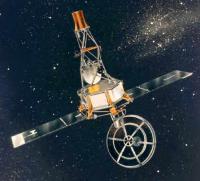 The needed mid-course correction was made by encoding computer commands on tape, feeding them to the Deep Space Network’s antennae at Goldstone, and transmitting them to Mariner 2, which in turn fed them into its own command sequencer and, over a million and a half miles from Earth, fired its thrusters for almost four hours to adjust its trajectory. The mission was a success, but only because the recently established DSN was able to exert the kind of control over the vehicle that will be impossible for any future spacecraft that departs the Solar System. William E. Burrows tells the Mariner 2 tale wonderfully in his Exploring Space: Voyages in the Solar System and Beyond (New York: Random House, 1990).
Space lore is replete with tales of in-flight repair of the sort that will be out of the question at interstellar distances. Consider the two Voyagers. Interstellar distances make their epic journeys seem like a stroll through the neighborhood, but even interplanetary missions can be jeopardized by the simple fact that radio signals move at the speed of light. Mere days away from its closest encounter with Uranus in January of 1986, Voyager 2’s imaging team discovered black and white streaks running through the pictures streaming in from the outer Solar System.
The problem was evidently due to an error that had appeared out of nowhere inside a chip responsible for compressing Voyager’s images for transmission to Earth. Fixing it required the team to write a new program that could avoid the damaged computer memory while still using the healthy parts of the circuit. Having tested the new program, controllers had to upload it to Voyager, a feat that was accomplished only four days before the probe reached Uranus.
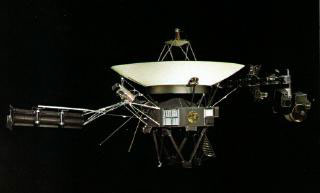 The resulting images were spectacular, and took advantage of new compression techniques that allowed more information to be sent despite the fact that the data rate from the distant planet was substantially lower than in Voyager’s previous planetary encounters. From image compression to attitude control and last-minute repair, Voyager 2 demanded tight coordination between Earth-bound controllers and the probe’s digital systems.
As we extend mission distances to the Kuiper Belt and beyond, the lesson of these earlier probes is clear: Even the shortest conceivable interstellar mission demands long-life electronics and enough on-board intelligence to adapt to whatever situation the probe finds around a neighboring star. As artificial intelligence advances, we may also hope to build a probe that can exercise judgment about the choice of science experiments en-route, the most interesting planets to survey upon arrival, and the protocols of any possible communication with extraterrestrials. Moreover, because the probe must be self-repairing, no pre-determined set of instructions will be able to foresee all contingencies. Tools must mutate, seeking the optimum solution to unexpected breakdowns. That makes the art of genetic algorithms and evolutionary hardware crucial for the idea of interstellar flight.
Recommended reading: Greg Bear’s Queen of Angels (New York: Warner Books, 1990), a novel that seems to have the last word on the subject of automated space probes and self-evolving intelligence.


New map hints at Venus’ wet, volcanic past
14 July 2009
Venus Express has charted the first map of Venus’ southern hemisphere at infrared wavelengths. The new map hints that our neighbouring world may once have been more Earth-like, with a plate tectonics system and an ocean of water.
The map comprises over a thousand individual images, recorded between May 2006 and December 2007. Because Venus is covered in clouds, normal cameras cannot see the surface, but Venus Express used a particular infrared wavelength that can see through them.
“Venus is a big planet, being heated by radioactive elements in its interior. It should have as much volcanic activity as Earth.”
Although radar systems have been used in the past to provide high-resolution maps of Venus’ surface, Venus Express is the first orbiting spacecraft to produce a map that hints at the chemical composition of the rocks. The new data are consistent with suspicions that the highland plateaus of Venus are ancient continents, once surrounded by ocean and produced by past volcanic activity.
“This is not proof, but it is consistent. All we can really say at the moment is that the plateau rocks look different from elsewhere,” says Nils Müller at the Joint Planetary Interior Physics Research Group of the University Münster and DLR Berlin, who headed the mapping efforts.
Full article here:
http://www.esa.int/esaCP/SEMUQCLXOWF_index_0.html
Is the rotation rate of Venus slowing down? According to Venus Express, the planet is now taking 6.5 minutes longer to complete one rotation on its axis than back when Magellan measured it in the early 1990s.
Full article here:
http://www.universetoday.com/93494/is-venus-rotation-slowing-down/#